
What's Happening?
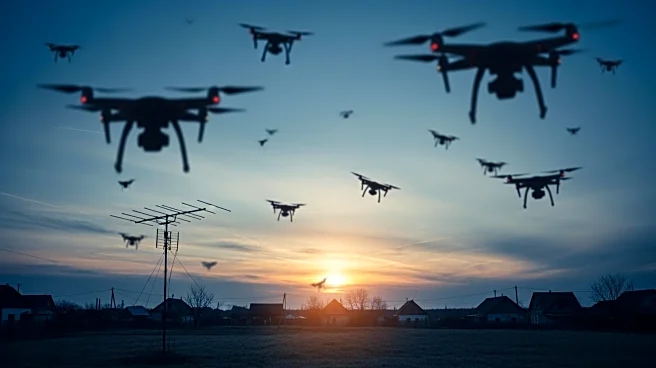
The Ukrainian Ministry of Defence (MoD) has announced plans to produce up to 400,000 rounds of 'Horoshok' anti-drone ammunition. This initiative aims to counter the threat posed by Russian-operated drones, specifically the First-Person View (FPV) and
Mavic-class systems. The Horoshok rounds, available in 5.56x45 mm and 5.45x39 mm calibers, can be fired from standard service rifles and are designed to engage enemy drones at distances of up to 50 and 60 meters, respectively. The Ukrainian military is transitioning from legacy weapons like the AK-74 to NATO standard weapons such as the AR-15 and Czech Bren 2. This shift is part of a broader modernization effort, despite the complexity introduced by the adoption of approximately 30 new models of small arms in 2024. The persistent threat of UAVs in the ongoing conflict has necessitated the use of available anti-drone methods, including standard issue rifles.
Why It's Important?
The production of Horoshok ammunition is crucial for Ukraine's defense strategy against the evolving threat of Russian UAVs. These drones, particularly the FPV systems, are commonly used in the conflict and have been enhanced with technologies like fiber-optic systems to resist jamming. The ability to effectively counter these drones is vital for Ukraine's military operations, as they pose a significant threat to ground forces. The move to produce specialized ammunition reflects the broader challenges faced by Ukraine in adapting to modern warfare tactics, where drones play a pivotal role. This development also highlights the ongoing arms race in drone technology and countermeasures, with implications for military strategies and defense industries worldwide.
What's Next?
As Ukraine ramps up its production of anti-drone ammunition, the focus will likely shift to further modernizing its military arsenal and tactics. The transition to NATO standard weapons is expected to continue, enhancing the effectiveness of Ukrainian forces. Additionally, the international community may see increased collaboration in developing and sharing anti-drone technologies. The ongoing conflict will likely drive further innovations in drone warfare and countermeasures, influencing military strategies globally. Stakeholders, including defense contractors and allied nations, may play a significant role in supporting Ukraine's efforts to bolster its defense capabilities.
Beyond the Headlines
The increased production of anti-drone ammunition by Ukraine underscores the ethical and strategic complexities of modern warfare. The use of drones in conflict zones raises questions about the rules of engagement and the protection of civilian populations. As both sides in the conflict leverage advanced technologies, the potential for escalation and unintended consequences grows. This development also highlights the need for international dialogue on the regulation of drone warfare and the establishment of norms to prevent misuse. The situation in Ukraine serves as a case study for the broader implications of drone technology in global security dynamics.