





What's Happening?
The US Army's Natick Soldier Systems Center is conducting rigorous tests on military gear to ensure its durability in extreme environments. This facility, often referred to as the 'mad science lab,' subjects equipment to conditions such as burning, freezing,
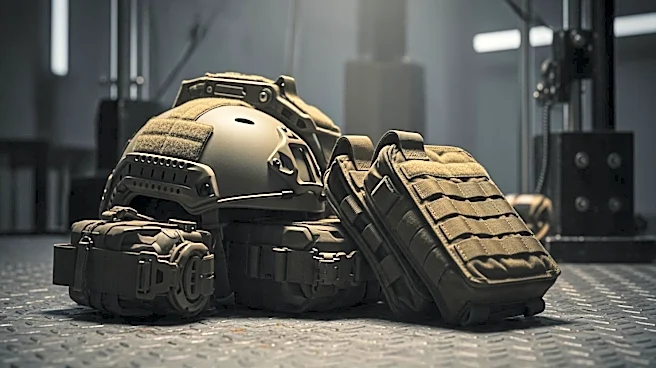
and other stress tests to simulate harsh battlefield scenarios. The goal is to develop life-saving body armor, long-lasting meals ready-to-eat (MREs), and other essential gear that can withstand Arctic warfare and drone-filled battlefields. These tests are crucial for preparing soldiers and equipment for future conflicts, ensuring that they can operate effectively in diverse and challenging conditions.
Why It's Important?
The testing conducted at the Natick Soldier Systems Center is vital for the US Army's readiness in future conflicts. By ensuring that gear can withstand extreme conditions, the Army is better prepared to protect its soldiers and maintain operational effectiveness in diverse environments. This research and development effort supports the Army's strategic goals of enhancing soldier survivability and performance. The advancements in body armor and MREs also reflect broader trends in military technology, where innovation is key to maintaining a competitive edge. The ability to adapt to new warfare scenarios, such as those involving drones, is increasingly important in modern military strategy.
What's Next?
The ongoing tests at the Natick Soldier Systems Center are expected to continue as the Army seeks to refine and improve its equipment. Future developments may include more advanced materials and technologies that further enhance the durability and functionality of military gear. As global conflicts evolve, the Army will likely focus on adapting its equipment to new threats and environments. Stakeholders, including military leaders and defense contractors, will be closely monitoring these advancements to ensure that the Army remains equipped to handle emerging challenges.