
What's Happening?
Lebanese President Joseph Aoun has called for negotiations with Israel to prevent further devastation in Lebanon, similar to the situation in Gaza. This comes as the Israeli Defense Forces (IDF) continue
their military operations against Hezbollah in Beirut's Dahieh district. The IDF's actions are a response to renewed rocket fire from Hezbollah, an Iran-backed group. Aoun emphasized that negotiations are not a sign of surrender but a necessary step to stop the tragedy in Lebanon. He also urged international actors to intervene and halt the ongoing conflict. The IDF has reported significant casualties among Hezbollah fighters and accused the group of endangering international forces by firing rockets near UNIFIL positions.
Why It's Important?
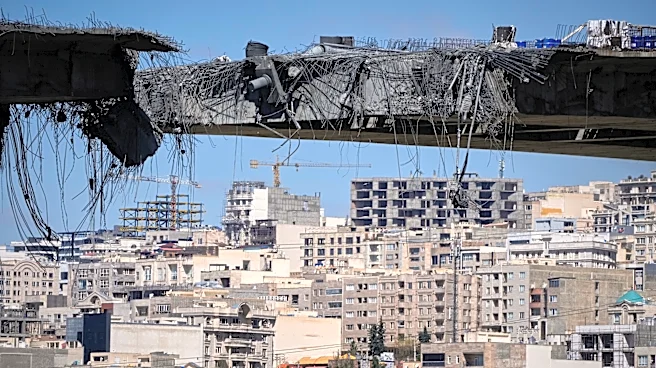
The escalation of military actions in Lebanon poses a significant threat to regional stability. The conflict between Israel and Hezbollah could lead to a broader confrontation involving other regional powers, potentially drawing in international actors. The humanitarian impact is also severe, with civilian populations at risk due to the ongoing military operations. Aoun's call for negotiations highlights the urgent need for diplomatic solutions to prevent further loss of life and infrastructure damage. The situation also underscores the complex geopolitical dynamics in the Middle East, where local conflicts can quickly escalate into international crises.
What's Next?
The international community may increase diplomatic efforts to mediate between Lebanon and Israel, aiming to de-escalate the situation. However, the success of such efforts will depend on the willingness of both parties to engage in meaningful dialogue. The ongoing military operations by the IDF suggest that Israel is determined to neutralize Hezbollah's capabilities, which could prolong the conflict. Meanwhile, Lebanon's internal political dynamics, including the influence of Hezbollah, will play a crucial role in shaping the country's response to the crisis.