



What's Happening?
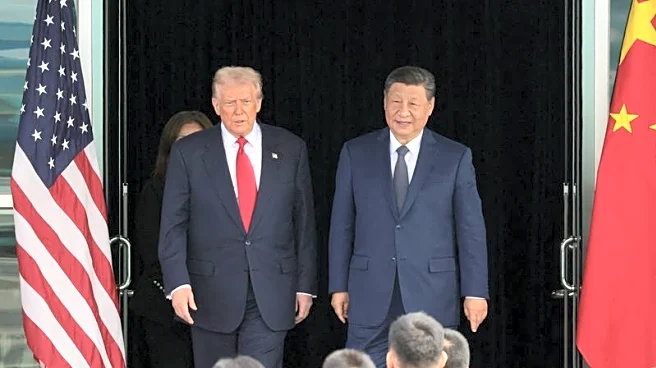
China's trade surplus surged to nearly $1.2 trillion in 2025, marking a record high despite increased tariffs from the United States under President Trump's administration. The rise in surplus is attributed to a significant increase in exports to regions
such as Africa, Southeast Asia, and Europe, which offset the decline in exports to the U.S. by 20%. Key drivers of this export growth include strong global demand for computer chips, electric vehicles, and other mechanical and electrical items. The China Association of Automobile Manufacturers reported a 21% increase in auto exports, driven by electric vehicles and plug-in hybrids. Despite the challenging trade environment, China's exports rose by 5.5% to $3.77 trillion, while imports remained flat at $2.58 trillion.
Why It's Important?
The record trade surplus highlights China's ability to adapt to global trade tensions by diversifying its export markets. This development underscores the resilience of China's export sector, which continues to be a significant growth driver for its economy. The shift in trade dynamics, with increased exports to non-U.S. markets, reflects China's strategic pivot to reduce reliance on the U.S. market amid ongoing trade disputes. This could have implications for U.S. industries facing increased competition from Chinese exports in other regions. Additionally, the focus on electric vehicles and technology exports aligns with global trends towards green energy and digital transformation, positioning China as a key player in these sectors.
What's Next?
China is expected to continue leveraging its export capabilities to support economic growth, despite the complex external trade environment. Economists predict that exports will remain a crucial growth driver in 2026, although at a slower pace than in 2025. The Chinese government may need to focus more on boosting domestic demand to sustain economic growth, as suggested by the International Monetary Fund. This could involve policy measures to enhance consumer spending and investment. The ongoing property downturn and its impact on consumer confidence will be critical factors to watch, as they could influence China's economic strategy and trade policies moving forward.