








What's Happening?
The Stockholm International Peace Research Institute (SIPRI) argues that many technologies labeled as 'emerging' in strategic and security studies are better understood as instances of 'technology convergence.' This perspective suggests that what is often
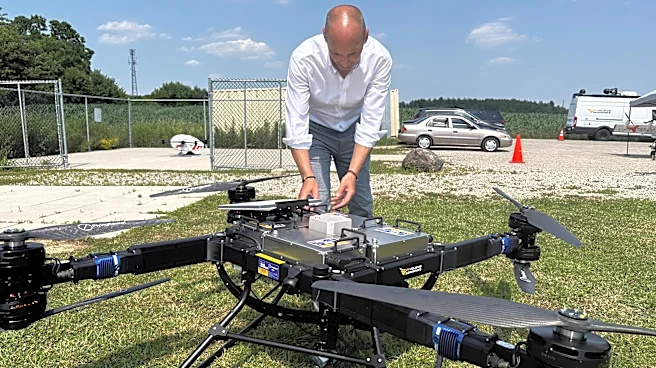
perceived as novel is, in fact, the integration of already mature systems—such as satellites, machine learning algorithms, and precision missiles—into new operational capabilities. SIPRI's analysis indicates that true novelty would require unprecedented underlying scientific breakthroughs, whereas convergence combines existing scientific advances into new applications. The institute's work, particularly on autonomy in weapon systems, highlights that describing technologies as 'emerging' can allow governments to postpone critical governance questions, including the applicability of existing arms control treaties to AI-enabled command-and-control systems, the need for redesigning export controls on dual-use quantum components, and the implications for international humanitarian law regarding autonomous targeting decisions. SIPRI suggests that this deferral has significant costs, as operational systems require immediate operational regulation rather than continuous monitoring of a future that has already arrived.
Why It's Important?
SIPRI's critique of the 'emerging technologies' label has significant implications for U.S. defense policy, strategic planning, and arms control efforts. By mischaracterizing operational technologies as still developing, policymakers may delay crucial regulatory frameworks and strategic responses, potentially leaving the U.S. vulnerable or unprepared for current threats. This conceptual imprecision can lead to a disconnect between the perceived state of technology and its actual deployment, affecting threat assessments, doctrine development, and procurement decisions. If the U.S. continues to view already deployed systems as 'emerging,' it risks falling behind adversaries who are actively integrating these technologies into their military capabilities. Furthermore, the delay in addressing governance questions for advanced weapon systems could lead to unforeseen ethical, legal, and humanitarian consequences, impacting international stability and the effectiveness of global arms control regimes.
What's Next?
The insights from SIPRI suggest a need for a more precise taxonomy in strategic studies, which could lead to a re-evaluation of how the U.S. Department of Defense and other agencies classify and respond to technological advancements. Future discussions may focus on distinguishing technologies based on their operational maturity, dual-use intensity, and strategic salience, rather than a broad 'emerging' label. This shift could prompt more proactive policy development regarding arms control, export regulations, and the application of international humanitarian law to advanced military systems. Stakeholders, including defense contractors, policymakers, and international legal experts, may need to engage in more urgent dialogues to establish clear guidelines and regulations for technologies that are already operational. The ongoing work by SIPRI on autonomy in weapon systems will likely continue to provide critical data and analysis to inform these discussions, pushing for timely and effective governance of military technologies.
Beyond the Headlines
The deeper implication of SIPRI's argument is that the language used in strategic discourse can profoundly influence policy outcomes and international security. The 'emerging technologies' label, while seemingly benign, can serve as a rhetorical device to avoid difficult decisions and maintain a status quo that may no longer be relevant. This linguistic inertia can mask the rapid pace of technological advancement and its integration into military capabilities, creating a false sense of security or delaying necessary adaptations in defense strategies. Ethically, postponing governance questions for autonomous weapons systems raises concerns about accountability for lethal outcomes and the potential for unintended escalation. Legally, the ambiguity surrounding these technologies challenges the very foundations of international humanitarian law, which relies on clear distinctions and human control. Culturally, the continued use of vague terminology might reflect a broader societal struggle to comprehend and adapt to the accelerating rate of technological change, particularly in the military domain.