





What's Happening?
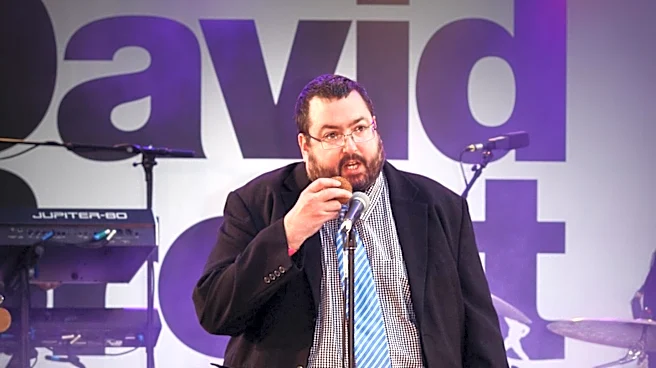
A venue at the Edinburgh Festival Fringe, Banshee Labyrinth, has conceded that it discriminated against Jewish comedian Philip Simon. The venue had canceled Simon's solo show, 'Shall I Compere Thee In A Funny Way,' last year, citing his views on the Gaza
War. According to Simon, the venue stated his views on the 'ongoing humanitarian crisis in Palestine' conflicted with their 'stance against the current Israeli government’s policy and actions.' Simon had previously stated he was canceled 'just for being Jewish' and that his social media posts, which mentioned hostages and women's groups not supporting women harmed on October 7, and his attendance at a 100-day memorial, were cited by the venue. Simon pursued legal action against Morrison Bros Ltd, the venue's owner, alleging 'unlawful belief-based discrimination.' On the eve of a hearing at Edinburgh Sheriff Court, the venue accepted it had acted unlawfully, violating the provisions of the Equalities Act.
Why It's Important?
This admission of discrimination by a prominent arts venue highlights significant concerns regarding freedom of expression and potential religious discrimination within the cultural sector. The case underscores the challenges faced by artists who may hold views that differ from those of venues or organizers, particularly on sensitive geopolitical issues. For Jewish artists, this incident raises questions about whether their identity or perspectives on the Israeli-Palestinian conflict could lead to professional repercussions. The legal concession by Banshee Labyrinth sets a precedent, affirming that such cancellations can constitute unlawful discrimination under the Equalities Act. This could encourage other artists to challenge similar actions and prompt venues to re-evaluate their policies regarding artist selection and cancellation, ensuring they do not inadvertently discriminate based on belief or religion. The situation also reflects broader societal tensions surrounding the Israeli-Palestinian conflict and its impact on public discourse and artistic platforms.
What's Next?
Following the venue's concession, the issue of liability has been resolved in Philip Simon's favor. The court will now address the matter of expenses, as Simon's lawyer, David Welsh, criticized the defender's conduct for 'dragging out proceedings' and incurring 'avoidable expenses.' The venue's lawyer, Darren Cox, disputed the possibility of pre-litigation settlement and requested a deferral on the decision regarding expenses. Judge Sheriff Roderick Flinn noted the defender acted 'unreasonably' by waiting until August 5 to accept discrimination and ruled that expenses related to substantive hearing preparations would be awarded at a higher 'solicitor-client' rate. Simon expressed satisfaction with the admission but lamented the prolonged legal process, stating the case was never about money but about 'fighting against the idea that a performer can be cancelled because of their religion.' He hopes for an apology, antisemitism training, and a contribution to an antisemitism charity.
Beyond the Headlines
This case extends beyond a single incident of discrimination, touching upon the delicate balance between artistic freedom, venue autonomy, and anti-discrimination laws. The Edinburgh Fringe, a globally recognized arts festival, prides itself on being a platform for diverse voices. This incident, however, reveals how deeply political and social issues can intersect with artistic programming, potentially leading to self-censorship or exclusion. The legal outcome could influence how cultural institutions approach programming decisions, particularly concerning artists from marginalized communities or those with views on contentious topics. It also highlights the ongoing struggle against antisemitism, demonstrating how expressions of Jewish identity or support for Israel can be misconstrued or penalized in certain environments. The call for antisemitism training and contributions to relevant charities suggests a broader effort to educate and foster a more inclusive environment within the arts, addressing systemic biases rather than just individual acts of discrimination.