








What's Happening?
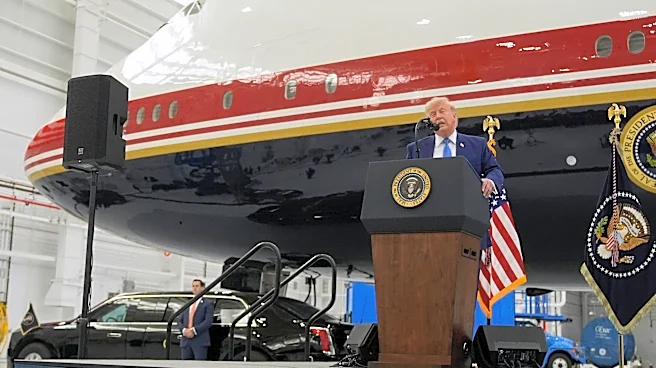
President Donald Trump has chosen not to publicly acknowledge Juneteenth for the second consecutive year, despite its status as a federal holiday commemorating the end of slavery. Instead, President Trump focused on unveiling a new Air Force One aircraft,
valued at approximately $400 million, which was gifted to the U.S. by the Qatari government. The unveiling took place at Joint Base Andrews in Maryland, where Trump praised the luxury jet now modified for official travel. The White House schedule did not include any events related to Juneteenth, listing only executive time, a greeting with U.S. Air Force service members, and travel to Camp David. This omission follows a pattern, as the Trump administration has previously removed Juneteenth and Martin Luther King Jr. Day from the National Park Service’s annual fee-free days list, actions that have drawn criticism from civil rights organizations.
Why It's Important?
The decision not to acknowledge Juneteenth highlights ongoing tensions regarding racial issues and the Trump administration's stance on diversity and inclusion. Juneteenth, recognized as a federal holiday in 2021, symbolizes the end of slavery and is a significant day for Black Americans. President Trump's omission may be seen as a reversal of efforts to engage Black voters, particularly given his administration's actions to ban diversity, equity, and inclusion initiatives in the federal government. This could have implications for his support among minority communities and civil rights groups, potentially affecting public perception and political dynamics. The unveiling of the new Air Force One, while a significant event, contrasts sharply with the lack of recognition for a holiday of such cultural and historical importance.
What's Next?
The lack of acknowledgment for Juneteenth may prompt reactions from civil rights organizations and political leaders who advocate for racial equality and recognition of Black history. These groups may increase pressure on the administration to address racial issues more directly and inclusively. Additionally, the unveiling of the new Air Force One could lead to discussions about government spending priorities, especially in the context of social justice and equity. As the nation approaches its 250th anniversary, the administration's actions and priorities will likely continue to be scrutinized, potentially influencing future policy decisions and public discourse.