



What's Happening?
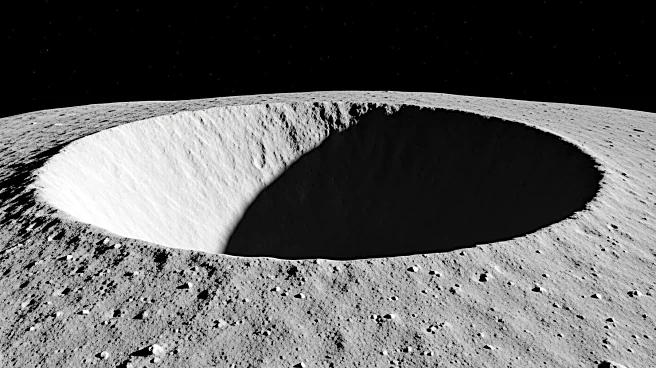
NASA's Lunar Reconnaissance Orbiter has discovered a 225-meter-wide crater on the Moon, formed in 2024 and identified through orbital images. This rare event, expected only once every 139 years, underscores ongoing impact risks on the lunar surface. The
crater's discovery was part of routine image comparisons, revealing a significant modification to the Moon's terrain. The impact created a bright blanket of ejecta, extending hundreds of meters and posing potential threats to future lunar infrastructure. The crater's location at the boundary of two lunar regions and its physical characteristics provide insights into the Moon's geological activity.
Why It's Important?
The discovery of this large crater on the Moon has implications for future lunar missions and infrastructure. The wide dispersal of debris from the impact highlights the potential hazards that such events pose to equipment and structures on the lunar surface. Understanding the frequency and scale of these impacts is crucial for planning safe and sustainable lunar exploration. The findings also contribute to our knowledge of the Moon's geological activity, challenging the perception of it as a geologically inactive body. This information is vital for assessing the risks and opportunities associated with human and robotic exploration of the Moon.