







What's Happening?
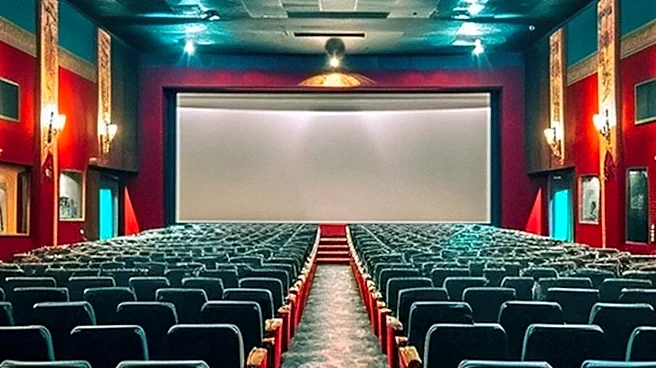
Leonardo Di Costanzo, a director, recently led a masterclass at Cinema Monicelli during the Festival della Sociologia 2026. The event, titled 'Abitare i margini' (Living on the Margins), followed a screening of his film 'Ariaferma.' The masterclass delved
into themes of social boundaries, human relationships, and the cinematic representation of marginality. This session was part of the broader Festival della Sociologia, which took place from October 7 to 10, 2026, in Narni, focusing on the question of what it means to 'inhabit' in contemporary society. The festival explored various social dynamics, bringing together sociology with art, politics, music, cinema, economics, theater, biology, and law to understand how spaces reflect power, care, and change. Di Costanzo's contribution highlighted the role of cinema in examining societal issues.
Why It's Important?
Di Costanzo's masterclass underscores the growing recognition of cinema as a powerful medium for social commentary and analysis. By exploring themes of marginality and human relationships through film, the event contributes to a deeper public understanding of complex societal issues. This integration of art and sociology can foster empathy and critical thinking among audiences, potentially influencing public discourse on social justice and inclusion. For the U.S., where discussions around social equity and representation are prominent, such interdisciplinary approaches can offer new frameworks for addressing domestic challenges. The event also highlights the global nature of these discussions, demonstrating how cultural festivals can serve as platforms for international dialogue on shared human experiences and societal structures.
What's Next?
The Festival della Sociologia, through events like Di Costanzo's masterclass, aims to stimulate ongoing reflection and dialogue on contemporary social issues. The insights gained from these discussions are intended to inform future sociological research and public policy debates. While no specific immediate actions are outlined for Di Costanzo, his continued engagement in such forums suggests a sustained commitment to using film as a tool for social exploration. The festival's emphasis on interdisciplinary approaches may encourage other academic and cultural institutions, including those in the U.S., to adopt similar models for engaging with complex social questions, potentially leading to more nuanced and comprehensive solutions.
Beyond the Headlines
The focus on 'marginality' in Di Costanzo's masterclass touches upon profound ethical and cultural dimensions. It challenges audiences to consider who defines the 'margins' and what it means to exist within or outside them. This exploration can lead to a re-evaluation of societal norms and power structures, prompting questions about systemic inequalities and the responsibility of individuals and institutions to address them. Culturally, the use of film to convey these complex narratives can transcend linguistic and national barriers, fostering a universal understanding of human struggles and resilience. The event implicitly advocates for a more inclusive society, where the experiences of those on the periphery are brought to the forefront, enriching the collective understanding of the human condition.