




What's Happening?
During this year's New York Climate Week, discussions among venture capitalists, engineers, and policymakers revealed that affordability and the demand for air conditioning are currently more pressing concerns than artificial intelligence in the context
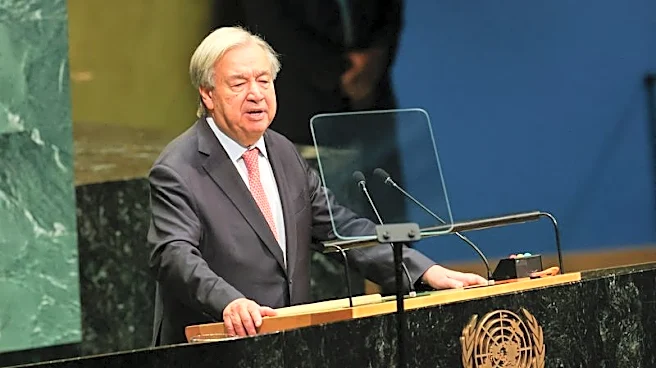
of climate resilience. While the U.N. Secretary General Antonio Guterres issued a final climate warning, the focus on the ground shifted to immediate, tangible issues affecting everyday citizens. Affordability has emerged as a significant midterm election issue in the U.S., impacting 15 public utility commission seats and 36 gubernatorial races. Furthermore, air conditioning, rather than AI, is projected to be the largest drain on power, with heat-related deaths on the rise, making increased grid capacity a critical need.
Why It's Important?
This shift in focus highlights a critical challenge in the climate change discourse: the need to balance long-term technological solutions with immediate societal needs and economic realities. The emphasis on affordability indicates that climate policies must consider the financial burden on consumers, especially as utility bills become a political issue. The rising demand for air conditioning underscores the direct human impact of climate change and the urgent need for robust energy infrastructure to ensure public health and safety. This prioritization suggests that public and political will for climate action may be more easily mobilized by issues that directly affect daily life and personal well-being, rather than abstract technological advancements.
What's Next?
Policymakers and climate advocates will likely need to integrate affordability and immediate quality-of-life concerns more directly into their climate strategies. This could lead to increased investment in energy efficiency programs, subsidies for clean energy adoption that reduce consumer costs, and infrastructure upgrades to support growing electricity demands, particularly for cooling. The political landscape suggests that candidates who address these tangible issues effectively may gain an advantage. Furthermore, the energy sector will face pressure to innovate in ways that make clean energy more accessible and affordable, while also ensuring grid stability and capacity to meet rising demands for essential services like air conditioning.
Beyond the Headlines
The observation that affordability and air conditioning are trumping AI at Climate Week reveals a deeper societal tension between aspirational technological progress and the practicalities of climate adaptation. It suggests that for climate action to gain widespread support, it must be framed not just as an environmental imperative, but also as a pathway to improved living standards and economic stability for all citizens. The focus on basic needs like cooling in the face of extreme heat highlights the immediate and existential threats posed by climate change, pushing abstract technological solutions like AI into a secondary role in public and political consciousness. This underscores the importance of human-centric approaches to climate policy.