







What's Happening?
The U.S. Army's 8th Theater Sustainment Command is leveraging artificial intelligence and autonomous watercraft to improve supply chain management in the Pacific region. According to Maj. Gen. Gavin Gardner, the command is using AI to make better-informed
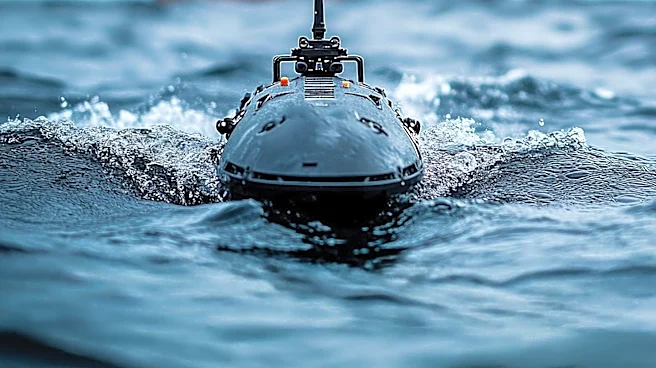
decisions regarding demand analysis and resource allocation. This approach aims to optimize logistics by determining the most efficient way to stock and deliver supplies, given the constraints of limited resources. The command is also collaborating with industry partners to develop and test larger, faster autonomous vessels capable of transporting significant cargo. These efforts are part of a broader strategy to enhance logistical operations across the vast distances between the continental United States and forward positions in countries like South Korea and Japan.
Why It's Important?
The integration of AI and autonomous systems into military logistics represents a significant advancement in operational efficiency and strategic capability. By improving supply chain management, the Army can ensure timely and effective support for its forces in the Indo-Pacific region, a critical area of geopolitical interest. The use of autonomous watercraft could reduce the need for manned operations, potentially lowering costs and increasing safety. This technological innovation aligns with broader military goals of maintaining readiness and adaptability in diverse environments. The success of these initiatives could influence future military logistics strategies and set a precedent for the adoption of similar technologies in other sectors.
What's Next?
The Army plans to continue testing and refining these technologies, with the potential for widespread deployment of medium-sized autonomous vessels throughout the Indo-Pacific theater. This includes potential changes to U.S. maritime laws to accommodate unmanned systems in ports, which would facilitate the rapid deployment and integration of these technologies. The ongoing collaboration with industry partners suggests a continued focus on innovation and adaptation to meet logistical demands. As these technologies mature, they may be integrated into broader military operations, enhancing the U.S. military's ability to project power and sustain operations in key regions.