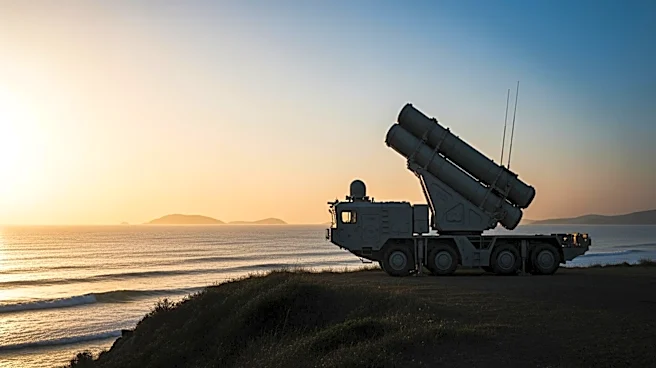

What's Happening?
China is intensifying its defense and security presence beyond the Western Pacific, focusing on the Indo-Pacific region. This strategic expansion involves building security cooperation, infrastructure
development, and a more regularized presence in the Southwest Pacific, Indian Ocean, and Australia's maritime approaches. China's approach is characterized by a long-term strategy that prioritizes persistence and gradual advantage, aiming to normalize its presence and shift the strategic balance in its favor. The modernization of China's navy and the use of a layered toolkit combining military, paramilitary, and civilian instruments are central to this effort.
Why It's Important?
China's strategic expansion has significant implications for regional security dynamics and international relations. By increasing its presence in the Indo-Pacific, China challenges the status quo and complicates the strategic calculations of other regional actors, including the United States and its allies. This expansion could lead to shifts in power balances and influence in the region, affecting global security and economic interests. The use of a measured and incremental approach allows China to strengthen its position without provoking a unified or forceful response from other nations.
What's Next?
As China continues to expand its presence in the Indo-Pacific, regional actors may need to reassess their security strategies and alliances. The potential for increased military and paramilitary activities could lead to heightened tensions and necessitate diplomatic efforts to manage conflicts. The international community will likely monitor China's actions closely, with potential responses ranging from increased military presence to diplomatic negotiations aimed at maintaining regional stability.