
What's Happening?
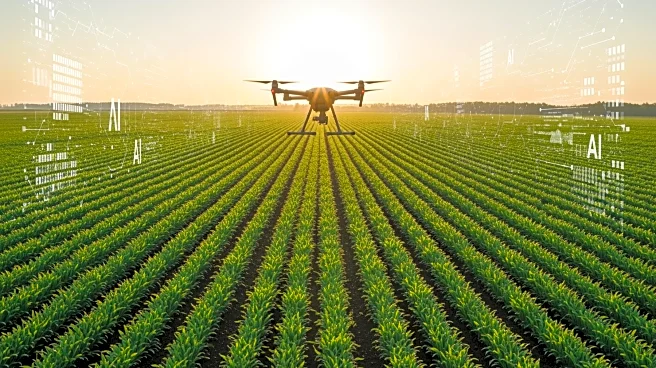
The Indian government has introduced Bharat VISTAAR, an AI-based platform designed to enhance agricultural productivity and farmer income. Announced in the Union Budget 2026-27, this initiative is part
of a broader strategy to position agriculture as a key driver of economic growth. Bharat VISTAAR, which stands for Virtually Integrated System to Access Agricultural Resources, aims to provide farmers with data-driven insights and support better farming practices. The platform is expected to facilitate high-value agriculture, crop diversification, and post-harvest processing, aligning with the government's focus on sustainable and climate-resilient farming. Industry experts and stakeholders have praised the initiative for its potential to transform Indian agriculture through technology and innovation.
Why It's Important?
Bharat VISTAAR represents a significant step towards modernizing Indian agriculture, which is crucial for the country's economic development and food security. By leveraging AI and digital tools, the initiative aims to improve farm productivity, optimize resource use, and enhance market access for farmers. This could lead to increased farmer incomes, reduced production risks, and a more resilient agricultural sector. The focus on technology-driven solutions aligns with global trends towards smart agriculture and sustainable farming practices. The initiative also supports the government's vision of a self-reliant and prosperous agricultural future, potentially benefiting millions of smallholder farmers and rural communities across India.
Beyond the Headlines
The introduction of Bharat VISTAAR highlights the growing importance of technology in agriculture and its potential to address challenges such as climate change, resource scarcity, and market volatility. By integrating AI with existing agricultural advisory systems, the platform could provide personalized support to farmers, helping them make informed decisions about crops, inputs, and markets. This could lead to more efficient and sustainable farming practices, contributing to long-term food security and environmental sustainability. The initiative also underscores the need for continued investment in digital infrastructure and capacity building to ensure that farmers can fully benefit from these technological advancements.