



What's Happening?
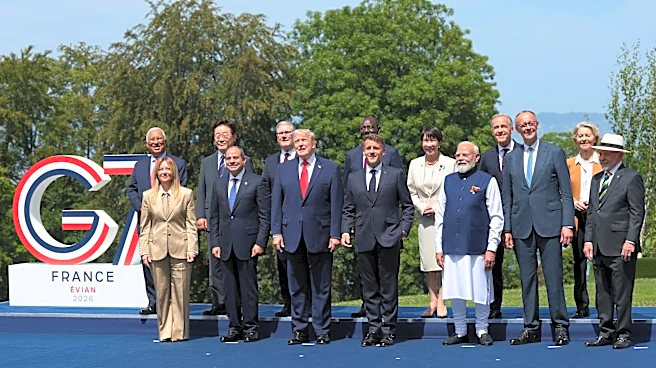
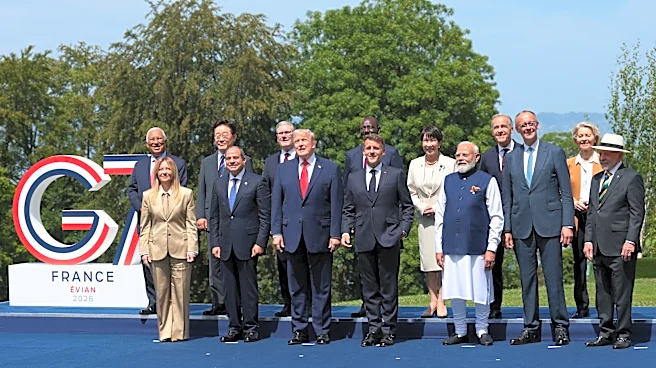
Foreign ministers from the Group of Seven (G7) nations have publicly endorsed the United Nations-authorized Gang Suppression Force in Haiti. This support comes as a significant deployment of Salvadoran military troops, approximately 2,500 soldiers, by
President Nayib Bukele, raises concerns regarding coordination, accountability, and civilian protection during intensified anti-gang operations. In a joint statement issued after their meeting in Paris, the G7 ministers welcomed the recent six-month renewal of the force's mandate through March 2027, emphasizing its crucial role in restoring security and stability in Haiti. However, the G7 also stressed the importance of breaking gang control while ensuring that security operations prioritize the protection of civilians. The Salvadoran troops are largely operating outside the command structure of the UN-authorized force and monitoring mechanisms, leading to questions about operational oversight and potential abuses.
Why It's Important?
The G7's statement highlights the complex and precarious security situation in Haiti, where gang violence has led to a severe humanitarian crisis, including over 4,200 deaths and 1.5 million displaced persons between January and September 2026. The involvement of Salvadoran troops, while aimed at combating gangs, introduces challenges related to international coordination and human rights oversight. The lack of integration of these troops into the UN-authorized force's command structure raises concerns about accountability for potential civilian casualties and abuses, as noted by organizations like Amnesty International. For the United States, a stable Haiti is crucial for regional security and humanitarian reasons, as instability can lead to migration crises and broader regional disruptions. The G7's call for civilian protection and adherence to the rule of law underscores the international community's commitment to a rights-based approach, even amidst urgent security needs, and reflects a desire to prevent further destabilization.
What's Next?
The G7's endorsement of the UN-authorized force, coupled with warnings about civilian protection, suggests a continued international focus on Haiti's security and humanitarian crises. There will likely be increased pressure on all security actors in Haiti, including the Salvadoran contingent, to coordinate operations and adhere to international human rights law. Amnesty International has called for the public release of the agreement governing the Salvadoran deployment to ensure transparency and accountability. The UN Integrated Office in Haiti (BINUH) has reiterated that anti-gang operations must comply with international human rights law and that alleged violations must be investigated. The G7 also urged increased financial contributions to the UN trust fund supporting security operations and humanitarian aid. Additionally, the G7 expressed concerns about the participation of sanctioned individuals in Haiti's electoral process, emphasizing the need for credible democratic processes and leaders who serve the public interest with integrity.
Beyond the Headlines
The situation in Haiti, as highlighted by the G7, reveals deeper implications concerning international intervention in fragile states. The deployment of a foreign military force, even with humanitarian intentions, often brings complex questions of sovereignty, accountability, and the potential for unintended consequences. The G7's nuanced stance—supporting the mission while cautioning against civilian harm—reflects the delicate balance between security imperatives and human rights. This scenario could set precedents for future international responses to internal conflicts, emphasizing the need for robust oversight mechanisms and clear chains of command for all participating forces. Furthermore, the concerns about the credibility of Haiti's electoral process underscore the long-term challenge of rebuilding democratic institutions in a country ravaged by violence and political instability, suggesting that security interventions must be coupled with comprehensive governance and development strategies to achieve lasting peace.