


What's Happening?
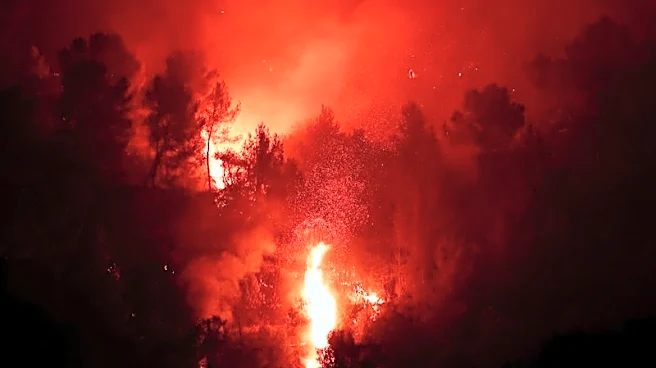
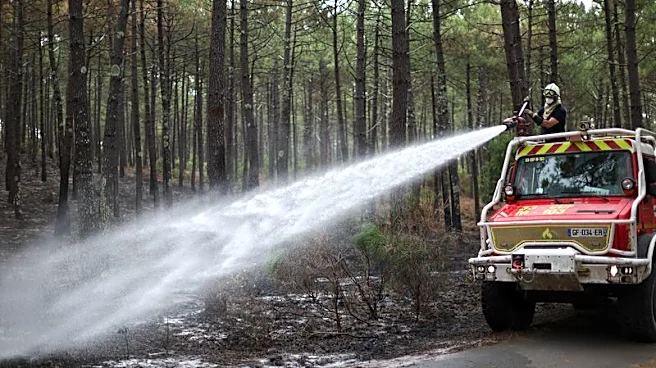
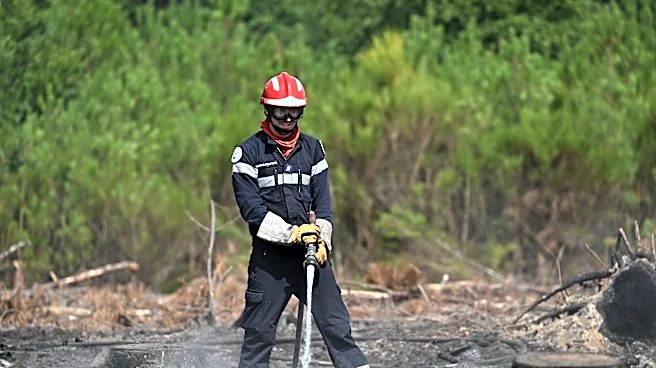
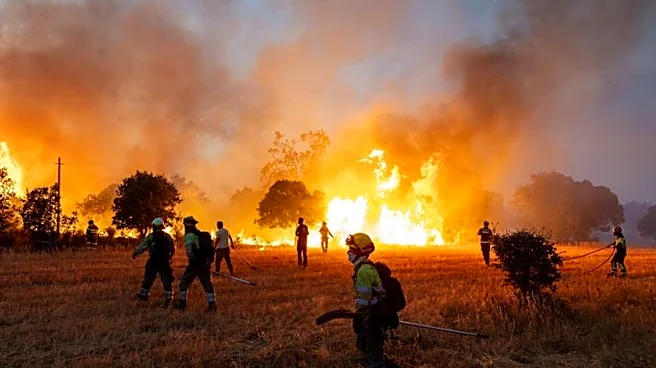
In France, firefighters have managed to contain a vast wildfire in the Gironde region, allowing nearly 198,000 people to return home after what may have been the country's largest peacetime evacuation. However, new fires have forced thousands to flee
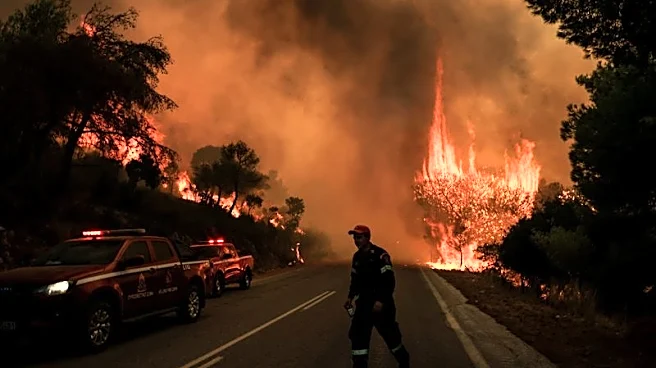
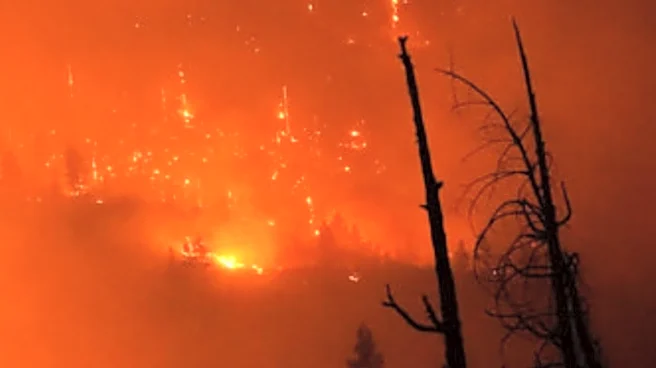
in other parts of France and Greece. In the Var region of France, a fire that was thought to be under control has flared up again, prompting further evacuations. Meanwhile, in Greece, gale-force winds are driving flames through the coastal area of Porto Germeno, west of Athens, leading to evacuations by sea. The situation underscores the volatile nature of wildfire management in Europe.
Why It's Important?
The wildfire crisis in Europe is a stark reminder of the challenges posed by climate change, with rising temperatures and prolonged droughts creating conditions conducive to wildfires. The economic and social impacts are significant, with large-scale evacuations disrupting communities and straining emergency services. The fires also pose a threat to biodiversity and natural habitats, with millions of animals affected. The situation calls for urgent action to address climate change and improve disaster preparedness and response strategies across Europe.
What's Next?
As firefighting efforts continue, authorities in France and Greece are likely to remain on high alert, with further evacuations possible if conditions worsen. The situation may prompt discussions on enhancing international cooperation and resource sharing to better manage such crises. In the long term, European countries may need to invest in more sustainable land management practices and increase funding for climate adaptation measures to mitigate the impact of future wildfires.