









What's Happening?
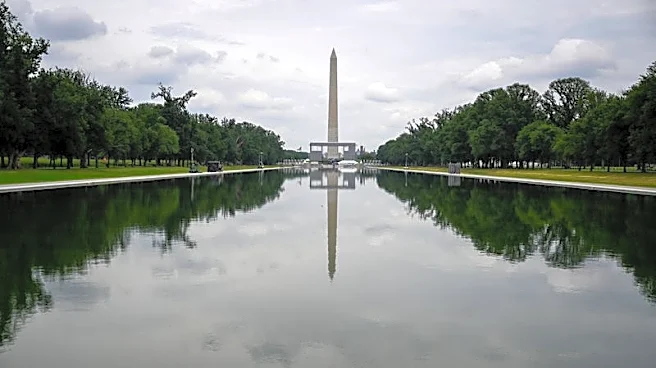
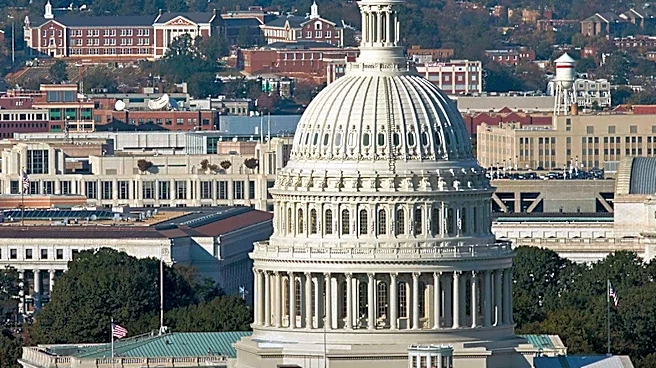
President Donald Trump has announced a series of ambitious renovation projects in Washington, D.C., including the East Potomac Golf Links, the White House ballroom, and the Lincoln Memorial area. These projects are part of a broader effort to revitalize
some of the capital's most iconic public spaces. However, the initiatives have sparked legal challenges, with lawsuits alleging that the administration bypassed congressional authority and historic preservation rules. Notably, a federal judge has temporarily halted the White House ballroom project, pending congressional approval. Additionally, plans for a triumphal arch, known as the 'Independence Arch,' have faced opposition from Vietnam War veterans, who argue it disrupts historical sight lines.
Why It's Important?
These renovation projects are significant as they reflect President Trump's vision for modernizing Washington's landmarks, potentially enhancing tourism and national pride. However, the legal challenges highlight tensions between the administration's ambitions and regulatory frameworks designed to protect historical sites. The outcome of these legal battles could set precedents for future federal projects, impacting how public spaces are managed and preserved. Moreover, the projects' success or failure could influence public perception of Trump's legacy in urban development and historical preservation.
What's Next?
The administration is appealing the temporary injunction on the White House ballroom project, and further legal proceedings are expected. The outcome of these cases will determine whether the projects proceed as planned. Additionally, the administration may need to engage with Congress and preservation groups to address concerns and secure necessary approvals. The ongoing legal disputes could delay the projects, affecting their completion timelines and potentially altering their scope.