





What's Happening?
The Las Cruces City Council is set to consider a proposed ordinance that would allow construction work to begin at 6 a.m. and continue until 8 p.m. during summer months. This proposal, identified as Council Bill 27-007 or Ordinance 3123, aims to replace
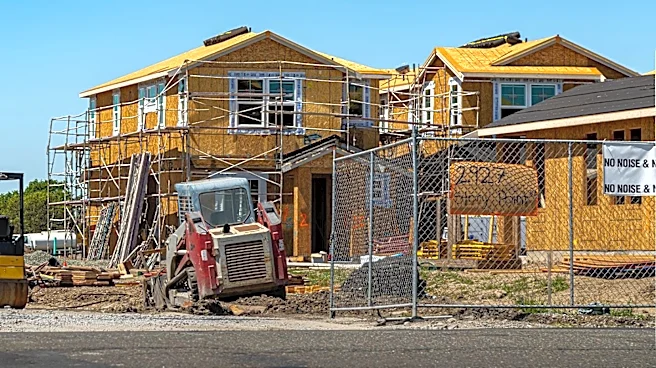
the city's current year-round construction schedule with separate summer and winter hours. The change would expand the permitted summer workday from 11 to 14 hours, while winter hours (October 1 to April 30) would remain unchanged, from 7 a.m. to 6 p.m. The initiative comes in response to complaints received by city staff and LCPD Codes regarding construction starting before the currently permitted 7 a.m. time, particularly in residential areas with active development. City staff also cited longer daylight hours and extreme summer heat as factors supporting earlier start times, allowing crews to reduce work during the hottest parts of the day. The ordinance would apply to construction, repair, or demolition activities for commercial and residential buildings, roadways, utility facilities, and other infrastructure when such work disturbs nearby residents.
Why It's Important?
This proposed ordinance holds significant implications for both the construction industry and residents in Las Cruces. For construction companies, the expanded summer hours could lead to increased productivity and potentially faster project completion, as crews would have more flexibility to work during cooler morning and evening hours, mitigating the risks associated with extreme summer heat. This could also help address labor efficiency and project timelines. Conversely, residents, particularly those in areas with ongoing development, could experience an earlier start to construction noise and activity, potentially impacting their comfort and quality of life. The city's acknowledgment of prior complaints underscores the existing tension between development needs and residential peace. The ordinance also introduces a provision allowing the city manager to modify hours for individual projects, which could offer flexibility but also raises questions about consistent enforcement and potential for subjective application. This balance between economic development and community well-being is a critical aspect of urban planning and local governance.
What's Next?
The Las Cruces City Council is scheduled to meet on Tuesday at 1 p.m. at City Hall to consider the proposed ordinance. During this meeting, councilors will have the option to approve, reject, amend, or postpone the ordinance. If approved, the new summer construction hours would take effect, altering the operational landscape for construction companies and the daily lives of residents. The provision allowing the city manager to modify hours for individual projects suggests that there could be ongoing adjustments and specific considerations for various developments. Stakeholders, including construction firms, residential communities, and local advocacy groups, will likely monitor the council's decision closely and may engage in further discussions regarding the implementation and impact of these new regulations. The city's ability to balance the needs of its growing construction sector with the concerns of its residents will be a key factor in the ordinance's success and public acceptance.
Beyond the Headlines
Beyond the immediate impact on construction schedules and residential comfort, this ordinance touches upon broader themes of urban development, quality of life, and regulatory adaptability. The city's rationale, citing extreme summer heat, highlights the increasing influence of climate factors on urban policy and labor practices. Allowing earlier starts could be seen as a proactive measure to protect workers from heat-related illnesses, reflecting a growing awareness of occupational health in challenging environmental conditions. However, the potential for increased noise pollution and disruption to residential areas also brings to light the ongoing challenge of managing urban growth in a way that is sustainable and equitable for all residents. The flexibility granted to the city manager to adjust hours for specific projects could set a precedent for more dynamic and context-sensitive urban planning, moving away from rigid, one-size-fits-all regulations. This could lead to more nuanced approaches to development that consider the unique characteristics of different neighborhoods and projects.