
What's Happening?
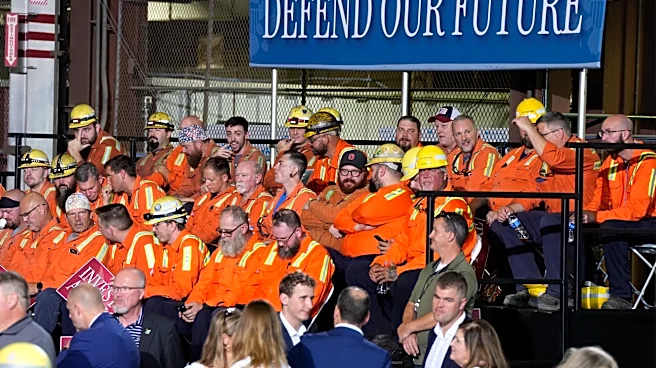
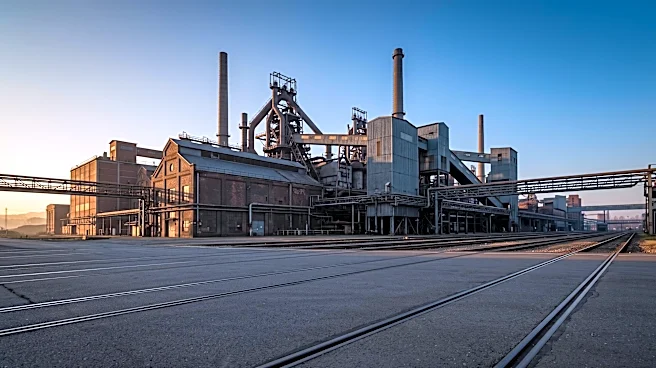
Vice President JD Vance is scheduled to return to his hometown in Ohio on Friday to campaign for Republican candidates at the Cleveland-Cliffs Middletown Works facility. This steel plant holds personal
significance for Vance, as it was formerly known as Armco Steel, where his grandfather, James Vance, worked for nearly 40 years. Vance plans to use this visit to highlight his Rust Belt origins and promote the Trump administration’s economic policies, particularly those aimed at expanding U.S. manufacturing. He will be joined by U.S. Energy Secretary Chris Wright. The event is part of Vance's increased travel schedule, which includes more public appearances and fundraising efforts. In his memoir, 'Hillbilly Elegy,' Vance described the steel plant as crucial to his family's economic well-being, helping them transition from Kentucky's hills to the American middle class. He recounted how his grandfather, known as Papaw, would proudly point out cars made with steel from his company.
Why It's Important?
This campaign stop is important as it underscores the Trump administration's focus on revitalizing American manufacturing and appealing to working-class voters in key industrial states. By campaigning at a site deeply connected to his family's history and the region's industrial past, Vice President Vance aims to reinforce a narrative of economic recovery and support for domestic industries. This strategy is particularly relevant in Ohio, a state that has shifted politically during the Trump era. The visit also serves to bolster Republican candidates ahead of the November midterm elections, where the party is working to maintain and expand its influence. The emphasis on 'plants like this wouldn’t exist were it not for some of the Trump administration’s economic policies' directly links current political efforts to tangible economic benefits for communities, potentially swaying voters who prioritize job creation and industrial growth. The event also highlights the ongoing political battle for the hearts and minds of voters in the Rust Belt, a region often seen as a bellwether for national elections.
What's Next?
Following this campaign stop, Vice President Vance is expected to continue increasing his travel schedule, engaging in more public events and fundraisers across the country to support Republican candidates. His office has already announced a trip to Brewer, Maine, where he will campaign for former Republican Governor Paul LePage. These efforts are geared towards the upcoming November midterm elections, where the Republican party aims to secure victories in various races, including the Ohio governor's office and a U.S. Senate seat. The visit to the steel plant will likely be followed by further discussions and policy proposals related to U.S. manufacturing and economic development, potentially influencing legislative agendas and public discourse on industrial policy. The focus on local economic impact and family heritage is a tactic that may be replicated in other campaign stops, as the administration seeks to connect with voters on a personal and economic level.
Beyond the Headlines
The Vice President's visit to the Cleveland-Cliffs Middletown Works facility carries deeper implications beyond immediate campaign objectives. It symbolizes a broader political strategy to reconnect with and mobilize the working-class base, particularly in regions that have experienced industrial decline. By invoking his family's history and the plant's role in their upward mobility, Vance taps into a powerful narrative of American aspiration and the dignity of labor. This approach also subtly addresses criticisms he has faced regarding his portrayal of his hometown in 'Hillbilly Elegy,' attempting to bridge any perceived disconnect with his roots. The event highlights the ongoing cultural and economic shifts in the Rust Belt, where traditional industries are grappling with modernization and global competition. The emphasis on 'Made in America' policies reflects a nationalistic economic sentiment that resonates with a significant portion of the electorate, potentially shaping long-term industrial policy and trade relations. This visit is not just about a single election but about reinforcing a particular vision for America's economic future and its industrial identity.