



What's Happening?
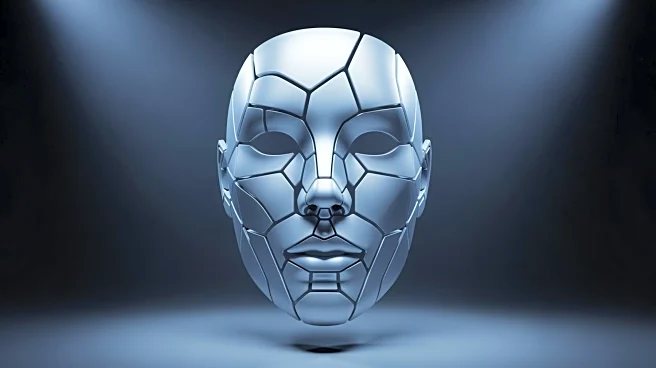
Recent research has highlighted the increasing difficulty in distinguishing AI-generated faces from real ones, even for individuals with exceptional facial recognition skills known as 'super recognizers.' The study, published in a scientific journal,
found that both super recognizers and typical individuals struggle to identify fake faces, with accuracy improving significantly after a brief training session on common AI rendering errors. The research underscores the sophistication of AI technologies in creating hyperrealistic images and the challenges they pose in terms of detection.
Why It's Important?
The ability of AI to generate highly realistic faces has significant implications for security, privacy, and trust in digital media. As AI-generated images become more prevalent, the potential for misuse in identity fraud, misinformation, and other malicious activities increases. This research highlights the need for effective detection methods and training to mitigate these risks. The findings also suggest that combining human expertise with AI detection algorithms could enhance the ability to identify synthetic images, which is crucial for maintaining the integrity of digital content.
What's Next?
Ongoing research will likely focus on improving detection algorithms and training methods to better equip individuals and organizations to identify AI-generated images. Collaboration between researchers, technology companies, and policymakers will be essential in developing standards and regulations to address the ethical and security challenges posed by these technologies. Public awareness campaigns may also be necessary to educate individuals about the potential risks and how to protect themselves from deception.