



What's Happening?
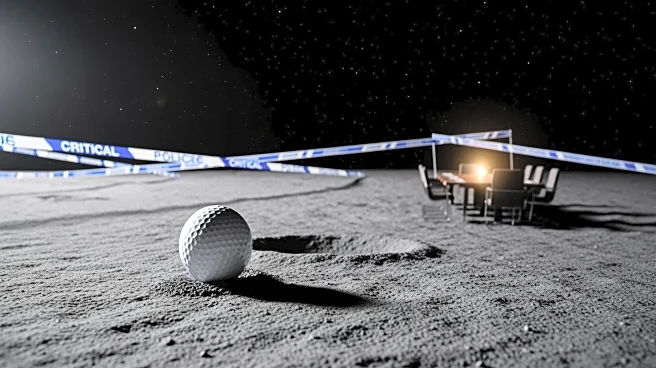
On February 6, 1971, astronaut Alan Shepard made history by hitting a golf ball on the Moon during the Apollo 14 mission. Shepard, the first American in space, used a makeshift 6-iron club to take two swings on the lunar surface. His first shot landed
in a crater, while the second traveled approximately 200 yards in the Moon's low-gravity environment. In 2021, image specialist Andy Saunders analyzed archival images and video to determine the actual distance of Shepard's second shot, concluding it traveled about 40 yards. This event remains a memorable moment in both space exploration and sports history.
Why It's Important?
Shepard's golf shot symbolizes human ingenuity and the spirit of exploration. It highlights the unique opportunities and challenges of conducting activities in space, where Earth's rules do not apply. This moment also underscores the cultural impact of space missions, capturing public imagination and inspiring future generations. The analysis of Shepard's shot decades later demonstrates advancements in technology and the continued interest in space exploration. It serves as a reminder of the achievements of the Apollo program and the potential for future missions to push the boundaries of human experience.