





What's Happening?
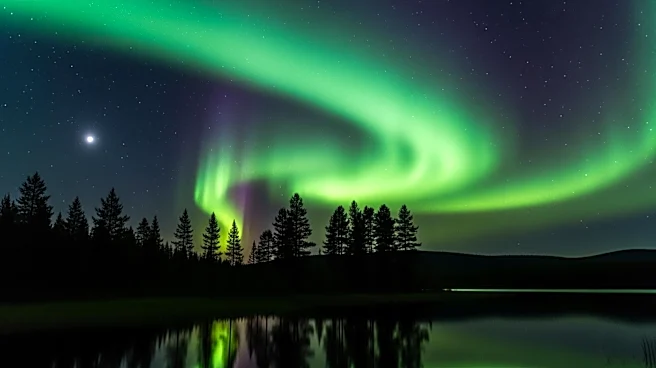
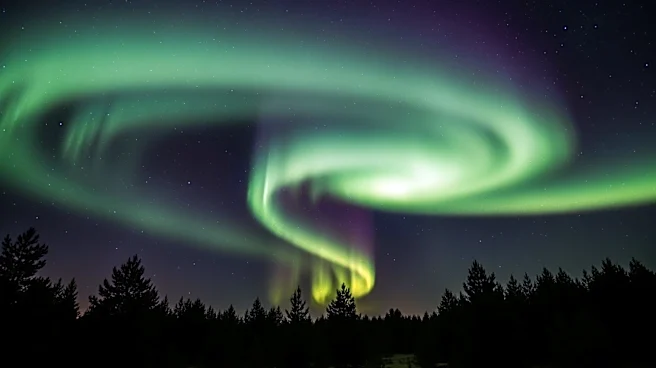
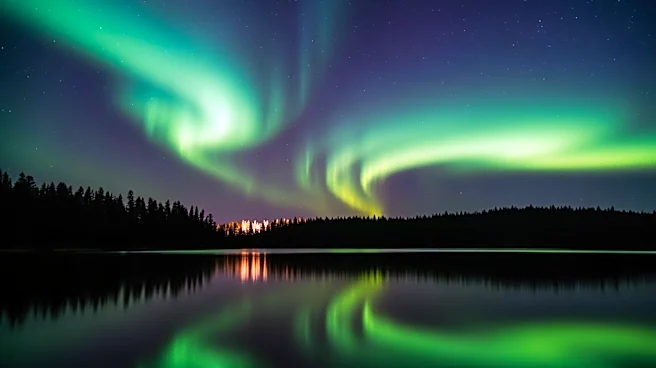
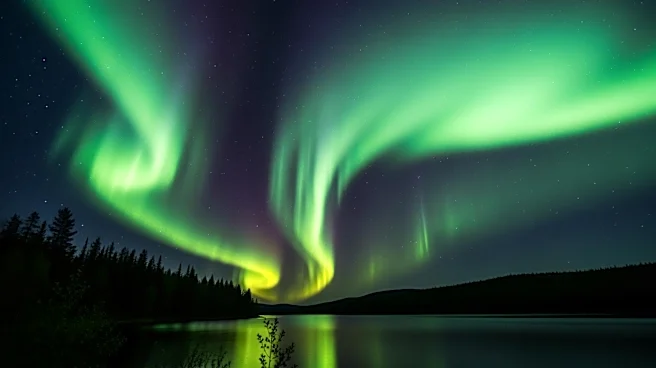
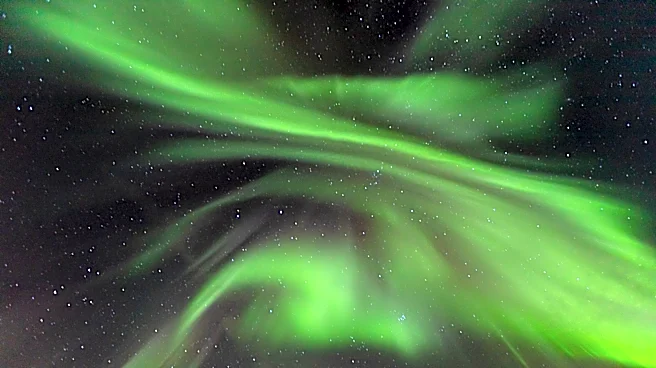
The National Oceanic and Atmospheric Administration (NOAA) has issued a G3 geomagnetic storm watch for Thursday and Friday, potentially allowing the northern lights to be visible across parts of the northern United States. This follows a series of powerful
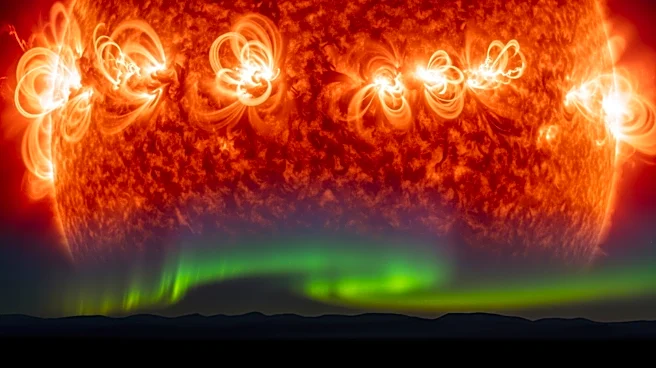
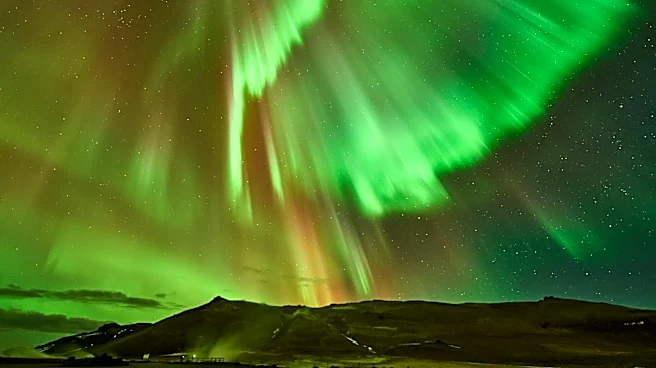
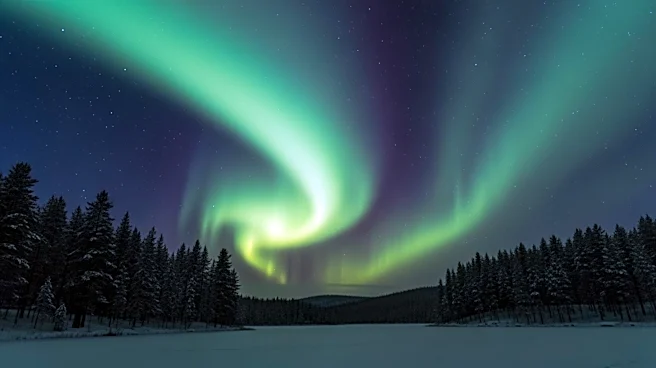
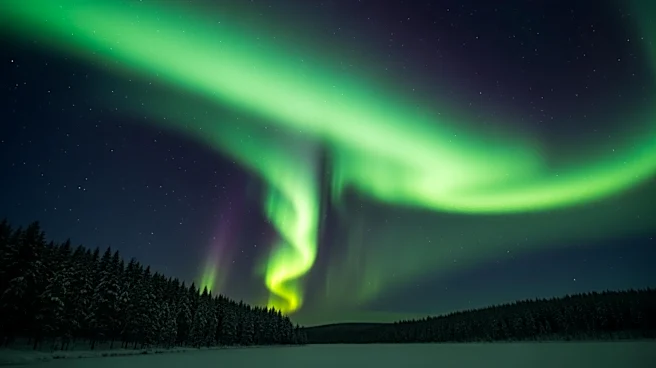
solar flares from sunspot Region 4455, which have released coronal mass ejections (CMEs) towards Earth. These CMEs, when interacting with Earth's magnetic field, can cause geomagnetic storms that produce the aurora borealis. The visibility of the northern lights could extend to areas near Seattle, Chicago, and Boston, although the exact timing and intensity remain uncertain.
Why It's Important?
The potential visibility of the northern lights in areas not typically accustomed to such displays could attract significant public interest and tourism, benefiting local economies. Additionally, geomagnetic storms can impact satellite operations, GPS systems, and power grids, posing challenges for infrastructure and technology sectors. Understanding and predicting these solar events is crucial for mitigating potential disruptions and ensuring the safety and reliability of technological systems.
What's Next?
As scientists continue to monitor the solar activity, further updates on the storm's progression and potential impacts are expected. Stakeholders in the technology and energy sectors may need to prepare for possible disruptions. Public interest in the northern lights could lead to increased media coverage and community events, particularly in regions where the aurora is rarely seen.