



What's Happening?
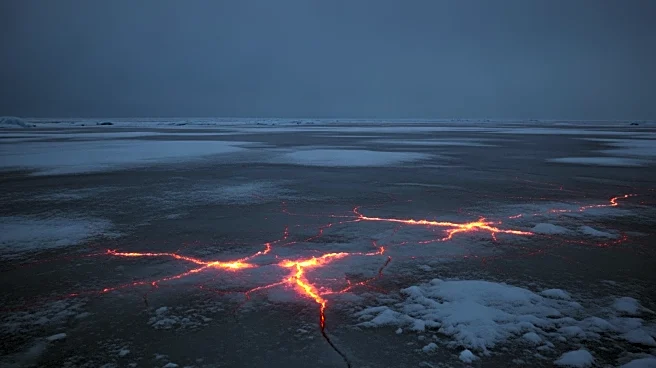
NASA researchers have observed a significant rise in the number of wildfires in the Arctic, which are now burning larger, hotter, and longer than in previous decades. This increase is attributed to the region's rapidly changing climate, with the Arctic warming
nearly four times faster than the global average. The warming climate affects precipitation patterns and soil moisture, making the landscape more susceptible to fires. Lightning, the primary ignition source, is also occurring farther north. These findings are detailed in a report by the Arctic Monitoring and Assessment Programme (AMAP). The intensity of these fires is a major concern as it profoundly impacts the changing ecosystems in the Arctic.
Why It's Important?
The rise in Arctic wildfires has significant implications for global climate change. The intense fires release large amounts of carbon stored in peat and permafrost into the atmosphere, contributing to global warming. The Arctic's unique ecosystems, which include boreal forests and tundra, are not adapted to the frequency and intensity of these fires, leading to long-term ecological changes. The smoke and habitat damage from these fires pose health risks to human communities and wildlife. The changes in the Arctic fire regime could have far-reaching effects on global climate patterns, making it a critical area of study for scientists.
What's Next?
To address these challenges, scientists are utilizing existing data and developing new technologies to better understand and monitor Arctic fires. NASA satellites provide valuable data for tracking fire activity and modeling future fire behavior. Researchers are focusing on understanding ignition sources, fuel availability, and fire behavior to evaluate the vulnerability of Arctic ecosystems. The findings emphasize the need for targeted observations and field campaigns to monitor the complex fire landscape in the Arctic. The outcomes of these studies will be crucial in predicting and mitigating the global impacts of Arctic fires.