



What's Happening?
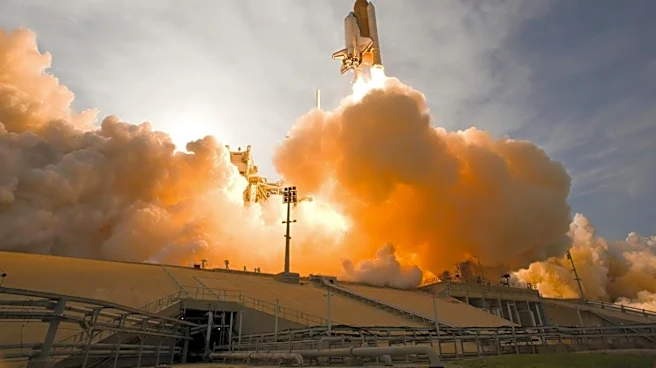
NASA has successfully launched the Artemis II mission, marking the first manned lunar mission since Apollo 17 in 1972. The mission involves four astronauts—three men and one woman—who will orbit the Moon. This mission is part of NASA's broader efforts
to establish a long-term human presence on the Moon for scientific and exploration purposes. The Artemis II mission builds on the success of Artemis I, which took place in November 2022. The mission will utilize the Space Launch System (SLS) rocket and the Orion spacecraft to conduct a lunar flyby, following a 'free-return' trajectory. This mission aims to validate the systems and hardware necessary for future human lunar exploration missions.
Why It's Important?
The Artemis II mission is a significant step in NASA's plan to return humans to the Moon and establish a sustainable presence there. This mission will test critical systems and gather data that will inform future missions, including the planned Artemis III mission, which aims to land humans near the lunar south pole. The success of Artemis II could pave the way for more ambitious lunar exploration and potentially serve as a precursor to human missions to Mars. The mission also represents a collaboration between NASA and international partners, highlighting the global interest in space exploration.
What's Next?
Following the Artemis II mission, NASA plans to continue its Artemis program with the Artemis III mission, which will aim to land humans on the lunar surface. The data and experience gained from Artemis II will be crucial in preparing for this next step. Additionally, the mission's success could lead to increased international collaboration and investment in lunar exploration, as well as inspire new technological advancements in space travel.