

What's Happening?
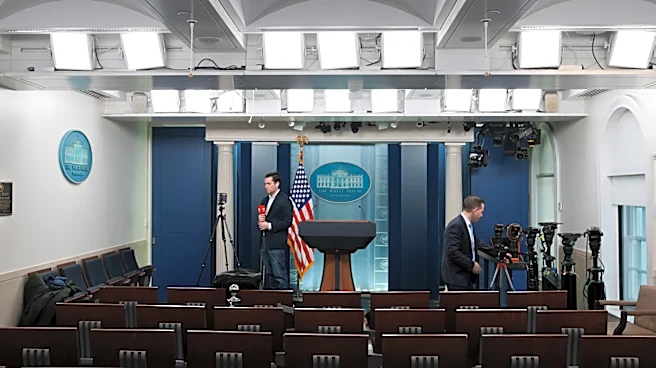
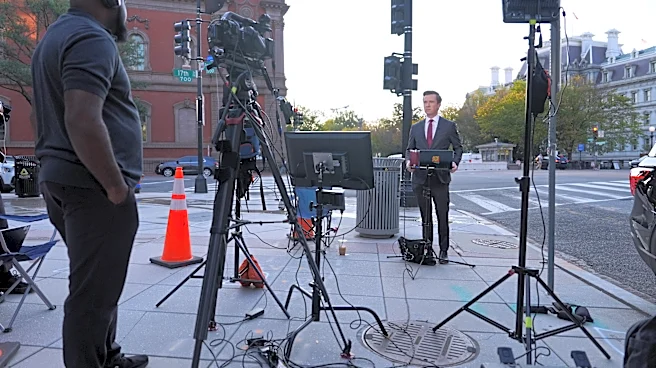
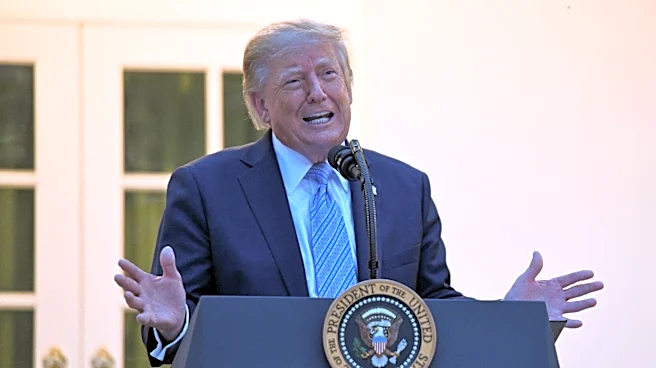
President Trump has intensified his conflict with news organizations, specifically targeting CNN and MS NOW. On Saturday morning, he launched a fresh attack on the press, questioning why outlets he labels as 'FAKE NEWS' should be granted access to the White
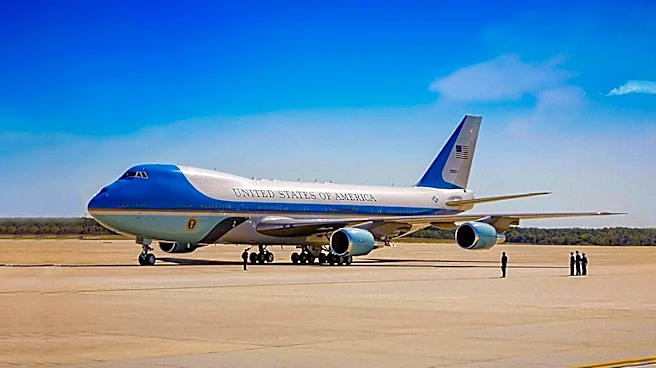
House. This follows his decision to block CNN from traveling with him on Air Force One for a trip to Tennessee. President Trump stated on Truth Social that despite his 'big Election Win,' nearly 100% of 'TRUMP' coverage has been negative for years. When speaking to reporters, he denied wanting only supportive news outlets in the press pool, asserting, 'I want real news, not fake news — like you.' He further added, 'I love an open, free press. I don’t like the fake press.' This action is part of a broader effort by President Trump to control media narratives, particularly concerning his administration's coverage, approval ratings, and policy impacts, just weeks before the midterm elections.
Why It's Important?
This escalation is significant as it challenges the traditional role of the White House press corps and raises concerns about press freedom and access in the U.S. The blocking of a major news outlet from Air Force One travel, a standard practice for covering presidential movements, represents a direct affront to established journalistic norms. President Trump's rhetoric, labeling certain news organizations as 'fake news' and questioning their legitimacy, can erode public trust in media institutions. This approach could set a precedent for future administrations to restrict access for news outlets deemed unfavorable, potentially limiting the public's ability to receive diverse and independent information about government activities. The timing, just over five weeks before midterm elections, suggests an attempt to shape public perception and potentially influence electoral outcomes by controlling the narrative surrounding his administration and its policies.
What's Next?
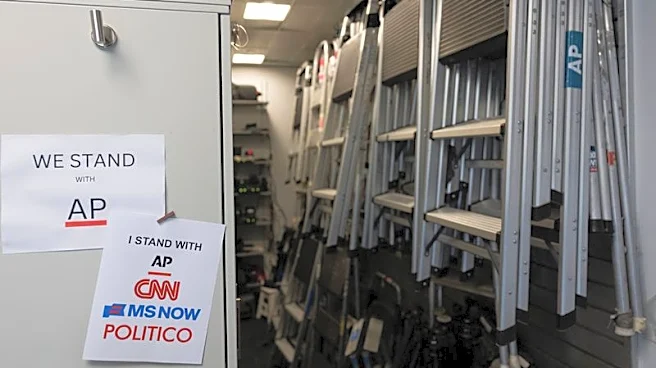
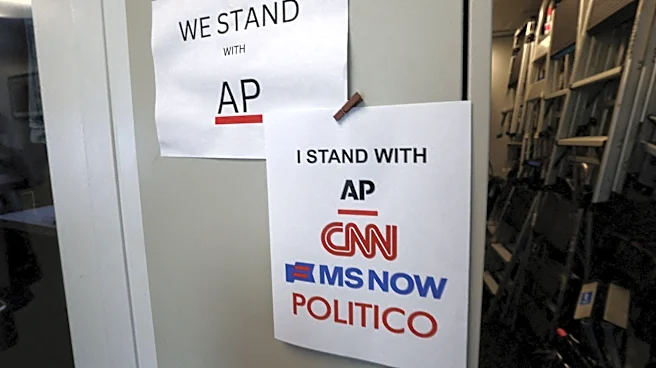
The standoff is likely to continue, with potential legal challenges from the affected news organizations. CNN and MS NOW, along with Politico, have previously sued President Trump and his administration officials after being denied access to White House grounds. The TV network pool, which includes Fox News, had also suspended its coverage of President Trump in response to earlier access restrictions. This ongoing conflict could lead to further legal battles over press access and the definition of 'legitimate' news. News organizations may continue to push back against these restrictions, potentially forming a united front to defend press freedom. Conversely, the administration might continue to create alternative communication channels, such as 'Trump TV,' to bypass traditional media and directly address supporters. The outcome of these disputes could redefine the relationship between the U.S. presidency and the press for future administrations.
Beyond the Headlines
Beyond the immediate access disputes, this situation highlights deeper implications for democratic discourse and the role of information in a polarized society. President Trump's consistent labeling of critical coverage as 'fake news' contributes to a climate of distrust in established institutions and can empower partisan media. This erosion of trust can make it challenging for the public to discern factual information from propaganda, impacting informed decision-making in a democracy. The administration's efforts to control the narrative by restricting access and promoting its own content could lead to a more fragmented media landscape, where citizens primarily consume news that aligns with their existing beliefs. This trend could further exacerbate political polarization and make it more difficult to find common ground on critical national issues, ultimately affecting the health of U.S. democratic processes.