


What's Happening?
A 13-year-old Scarborough eighth-grade student, Abdulrahman Mohammed, was killed in a vehicle collision on Warren Avenue in Portland, Maine, on Saturday night. Two other teenagers, aged 14 and 15, sustained serious but non-life-threatening injuries in the incident.
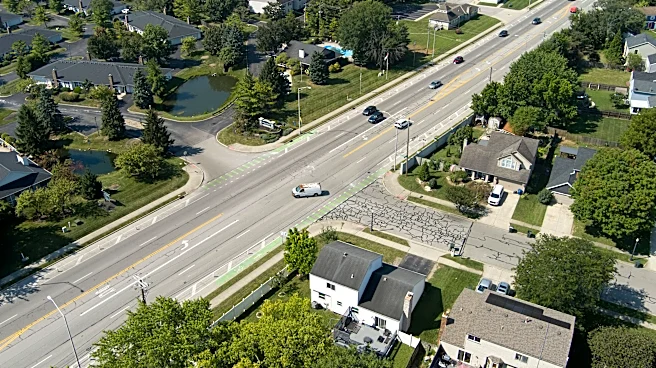
According to Portland police, a group of teenagers was walking on the north side of Warren Avenue around 9 p.m. when they 'entered the roadway abruptly' and were struck by a vehicle driven by a 48-year-old Portland man traveling in the same direction. Mohammed was pronounced dead at the scene. The incident occurred near a complex housing the Fitness Factory, Goldfish Swim School, and the Portland Sports Complex. The section of Warren Avenue where the crash happened lacks sidewalks, crosswalks, and streetlights, and has a posted speed limit of 35 mph. No charges have been filed against the driver, and police have not released further details regarding the vehicle or the teenagers' origin. Both Scarborough and Portland schools are offering counseling services to students.
Why It's Important?
This tragic incident marks the third pedestrian fatality in Portland this year, all occurring within the last four months, and highlights critical issues regarding pedestrian safety infrastructure in the city. The lack of sidewalks, crosswalks, and streetlights on Warren Avenue, particularly near a popular sports complex frequented by hundreds of children daily, underscores a significant urban planning and safety concern. The chair of the city's bicycle and pedestrian advisory committee, Myles Smith, emphasized that it is 'impossible' to safely access the sports complex without being driven, pointing out the inherent dangers of streets designed primarily for high-speed vehicle traffic with little consideration for pedestrians. This event is intensifying pressure on city officials to prioritize and accelerate 'Vision Zero' initiatives, which aim to eliminate serious pedestrian injuries and deaths. The repeated fatalities suggest that current measures are insufficient and that a more urgent and comprehensive approach to pedestrian infrastructure is needed to prevent future tragedies.
What's Next?
Following the fatal crash, there is an immediate call for action from city officials and community advocates. Councilor Anna Bullett urged residents to attend upcoming city meetings to demand more resources and 'bold and swift Vision Zero actions.' Councilor Wes Pelletier emphasized the need for processes that prioritize people over cars, particularly in commercial-industrial corridors like Warren Avenue. Myles Smith suggested immediate temporary measures, such as placing cones and painting new lines to eliminate the center turn lane in the affected section, to provide more room for error for those passing underneath the overpass. The Bicycle Coalition of Maine has also called for a thorough investigation to learn from the crash and implement changes to prevent similar incidents. The community expects increased scrutiny of urban planning and infrastructure decisions, with a focus on implementing concrete changes to enhance pedestrian safety across Portland.
Beyond the Headlines
The incident on Warren Avenue exposes a deeper systemic challenge in urban development: the historical prioritization of vehicular traffic over pedestrian safety, particularly in areas that serve as community hubs. The absence of basic pedestrian infrastructure like sidewalks and crosswalks, coupled with high-speed limits, creates inherently dangerous environments, especially for vulnerable populations like children. This tragedy also brings to light the ethical responsibility of city planners and policymakers to design inclusive and safe public spaces. The 'Vision Zero' initiative, while a step in the right direction, faces significant hurdles in implementation, often encountering resistance due to cost, perceived inconvenience to drivers, or a lack of political will. The ongoing debate about balancing traffic flow with pedestrian safety reflects a broader societal tension between convenience and public well-being, urging a re-evaluation of how urban spaces are conceived and utilized to ensure the safety of all residents.