





What's Happening?
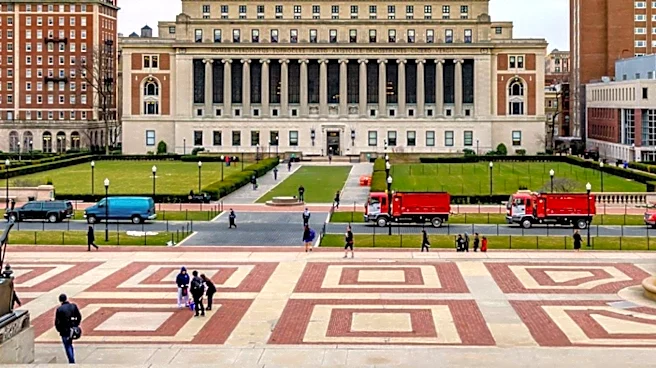
Columbia University is facing criticism for allegedly failing to fulfill its commitments under a 2009 Community Benefits Agreement (CBA) related to its Manhattanville campus expansion in West Harlem. According to the Columbia Sundial, the university pledged
over $150 million in total, including a $76 million benefits fund intended to be paid out between 2009 and 2025. However, a Barnard Bulletin report indicated that Columbia has only fulfilled six of 39 promised initiatives. Victor Edwards, chair of Manhattan Community Board 9, stated that many residents are dissatisfied with Columbia's handling of the agreement. The expansion involved demolishing five apartment buildings, displacing up to 140 low-income households, and relocating small businesses. Edwards noted that new businesses in the area do not cater to local residents, citing the closure of Floridita, a popular Cuban restaurant, after its relocation due to asbestos contamination that Columbia allegedly refused to fund for removal. Additionally, pledges for employment opportunities were reportedly limited to union workers, excluding many local residents, and undergraduate scholarships intended for West Harlem students were expanded to cover a broader 'Upper Manhattan' area, benefiting students from elite city high schools.
Why It's Important?
This situation highlights significant concerns regarding gentrification and community displacement in urban development projects. Columbia University, as New York's largest private landowner, has a substantial impact on the socio-economic landscape of Upper Manhattan. The alleged failure to uphold the CBA can exacerbate existing inequalities, pushing out long-term residents and small businesses that form the cultural and economic backbone of the community. The expansion of scholarship eligibility beyond the immediate West Harlem area undermines the original intent of supporting local students, potentially diverting resources to more affluent individuals within a broader geographic definition. This case also raises questions about the enforceability and effectiveness of Community Benefits Agreements, particularly when clauses may limit the community's ability to litigate or arbitrate breaches. The outcome could set a precedent for how large institutions engage with local communities in future development projects, influencing trust and cooperation between developers and residents.
What's Next?
Local officials and community groups are expected to continue scrutinizing Columbia University's adherence to the Community Benefits Agreement. Victor Edwards and Manhattan Community Board 9 will likely maintain pressure on the university to fulfill its outstanding pledges. The ongoing dialogue between community representatives and university officials will be crucial in determining any future actions or negotiations. The university has stated its commitment to ensuring continued growth creates meaningful benefits, but concrete steps to address the unfulfilled promises will be anticipated. This situation may also prompt other urban communities to review the terms and enforcement mechanisms of their own CBAs with large developers, potentially leading to stronger, more legally binding agreements in the future. The community's response could range from increased advocacy and public awareness campaigns to potential legal challenges, depending on the university's willingness to address the grievances.
Beyond the Headlines
The controversy surrounding Columbia's Manhattanville expansion extends beyond the immediate financial and housing impacts, touching upon deeper issues of community identity, cultural preservation, and institutional accountability. The displacement of long-standing businesses like Watkins Products and Floridita represents a loss of cultural landmarks and gathering places that contribute to the unique character of West Harlem. The shift towards more expensive businesses that do not cater to locals can erode the social fabric of the neighborhood, transforming it into an area less accessible and less representative of its historical residents. This case also underscores the power imbalance between large educational institutions with significant financial resources and local communities. It raises ethical questions about the responsibility of anchor institutions to genuinely uplift and integrate with their surrounding neighborhoods, rather than merely expanding their physical footprint. The long-term implications could include increased social stratification and a diminished sense of belonging for original residents in areas undergoing rapid development.