








What's Happening?
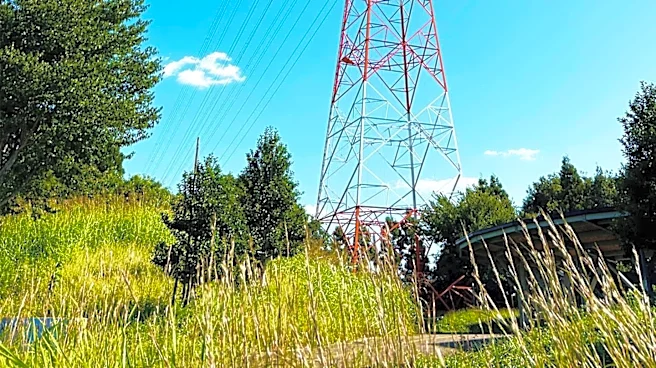
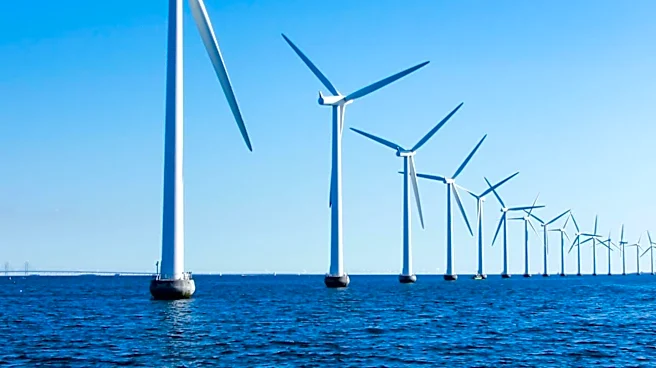
The Maine Public Utilities Commission (PUC) has approved an 800-megawatt (MW) onshore wind project and a 1,200-MW transmission project. These selections are part of a regional initiative to integrate more renewable energy from northern Maine into the New
England power grid. The PUC's decision follows a request for proposals under the Northern Maine Renewable Energy Development Program, established in 2021 through bipartisan legislation. Avangrid Networks Inc. was chosen for the transmission project, and Clearway Energy Group LLC for the wind generation project, with the latter contingent on the transmission project's progression. The wind project is expected to supply approximately 600 MW to Maine, leaving additional capacity on the transmission line for future generation projects. Maine Governor Janet Mills lauded the selections, emphasizing their potential to address energy costs and reliability while fostering economic growth.
Why It's Important?
This initiative is crucial for Maine and the broader New England region as it aims to enhance energy independence and reduce reliance on imported fossil fuels. By integrating substantial renewable energy into the grid, the projects are expected to stabilize energy costs and improve reliability for ratepayers. Maine is projected to bear less than 11 percent of the transmission line's cost, with other New England states sharing the remainder, highlighting a collaborative regional approach to energy infrastructure. Economically, the projects are anticipated to generate over 2,500 full-time jobs during a four-year construction phase, contribute approximately $150 million in new municipal and state tax revenue, and produce more than $2.4 billion in total economic output for Maine. This development aligns with broader U.S. goals for clean energy transition and regional economic development, demonstrating how states can collaborate to achieve shared energy and environmental objectives.
What's Next?
Before construction can commence, several steps remain. The PUC must finalize a power purchase agreement with Clearway for Maine's 600-MW share of the new generation and conduct a final review and approval of this agreement. Additionally, the transmission portion of the project requires approval from the Federal Energy Regulatory Commission (FERC). The PUC has recommended that the New England States Committee on Electricity work with the participating states and Avangrid to finalize a voluntary agreement for submission to FERC. These regulatory and contractual processes are critical for the projects to move forward, ensuring compliance and securing necessary approvals from both state and federal authorities. Stakeholders will be closely monitoring these developments to ensure the projects adhere to environmental standards, community engagement, and local economic benefit commitments.
Beyond the Headlines
The approval of these projects signifies a deeper commitment to renewable energy and regional cooperation in the U.S. It underscores a growing trend where states are leveraging their natural resources, in this case, northern Maine's wind potential, to create a more resilient and sustainable energy future. The collaborative cost-sharing model among New England states sets a precedent for future large-scale infrastructure projects, potentially influencing how other regions approach complex, multi-state energy initiatives. Furthermore, the emphasis on job creation and economic output highlights the dual benefit of green energy investments, positioning them not just as environmental solutions but also as powerful engines for local and regional economies. This move could also stimulate further innovation in renewable energy technologies and transmission infrastructure across the nation.