







What's Happening?
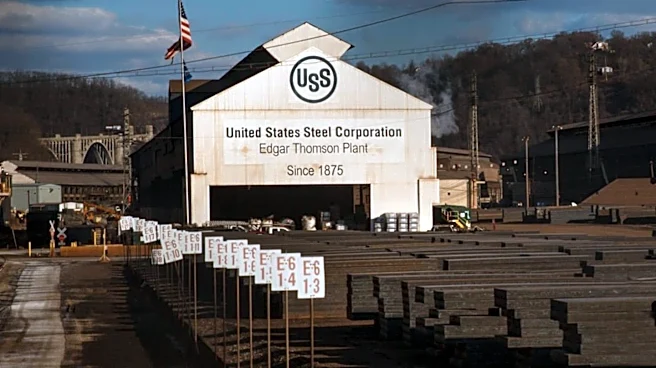
U.S. Steel's operations in Pennsylvania's Mon Valley, including the Clairton Coke Works and Edgar Thomson Steel Works, have been under scrutiny due to repeated violations of the Clean Air Act. The Clairton Coke Works, in particular, has been a focal point
of environmental concerns, with emissions contributing to health issues such as asthma in the local population. Despite fines exceeding $11 million since 2022, the plant has continued to violate air quality standards. The recent acquisition of U.S. Steel by Nippon Steel has raised hopes for investment in cleaner technologies, but plans to increase production may exacerbate pollution problems.
Why It's Important?
The ongoing pollution from U.S. Steel's operations in the Mon Valley has significant public health implications, contributing to high rates of respiratory illnesses in the region. The company's plans to increase production could worsen air quality, affecting thousands of residents. The situation highlights the tension between economic development and environmental health, as the steel industry remains a major employer in the area. The outcome of this situation could set a precedent for how industrial pollution is managed in the U.S., balancing economic interests with environmental and public health concerns.
What's Next?
With Nippon Steel's acquisition of U.S. Steel, there is potential for significant investment in cleaner technologies. However, the company's current plans to increase production using traditional methods may lead to further environmental degradation. Local communities and environmental groups are likely to continue advocating for stricter pollution controls and transparency in the company's operations. The outcome of these efforts could influence future regulatory actions and corporate strategies in the steel industry.
Beyond the Headlines
The Mon Valley's pollution issues are compounded by its geography, which traps pollutants and exacerbates their impact on local communities. This situation underscores the need for comprehensive environmental policies that address both industrial emissions and the unique challenges posed by local topography. The case also highlights the broader issue of environmental justice, as many affected residents are from low-income and minority communities who may lack the resources to relocate.