





What's Happening?
The Barclays Brief podcast, featuring Patrick Coffey and Maggie O'Neal, Barclays' Global Head of Sustainable Thematic and Policy Research, has highlighted the increasing importance of food security as a critical issue for the U.S. and global populations.
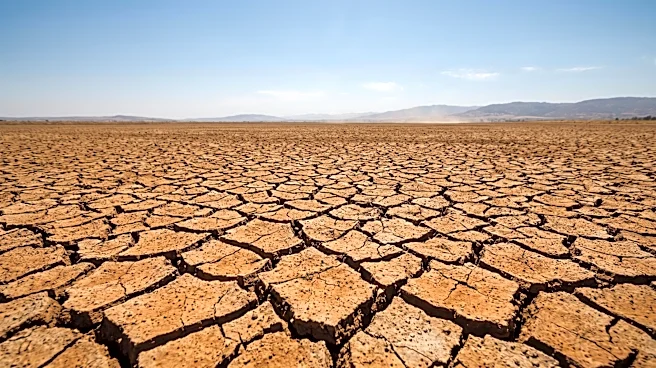
The discussion emphasized that food security is not merely about having enough food but also encompasses national security, economic resilience, and geopolitics. O'Neal pointed out that the global population is projected to reach 10 billion by 2050, potentially leading to a 50% increase in food demand. This growing demand is set against a backdrop of increasing extreme weather events, such as the 'Godzilla El Nino,' and geopolitical disruptions that impact supply chains and fertilizer prices. The podcast also touched upon the link between food security and food price inflation, noting that rising grocery bills are a significant component of the cost of living, which is a key concern for voters.
Why It's Important?
The rising concerns over food security and inflation have profound implications for U.S. households, policymakers, and the economy. Food inflation directly impacts the cost of living, placing financial pressure on families, particularly in emerging markets where food constitutes a larger portion of household expenses. This economic strain can lead to social destabilization. For the U.S., disruptions in global food supply chains, exacerbated by climate change and geopolitical tensions, could lead to higher food prices and potential shortages, affecting consumer purchasing power and overall economic stability. The discussion underscores that food security is evolving from a niche topic to a mainstream economic and financial theme, demanding strategic attention from investors and policymakers alike to ensure resilient food systems and mitigate future crises.
What's Next?
Policymakers are increasingly recognizing the urgency of food security, with discussions taking place at international forums like the G7 and G20. Efforts are underway to address issues such as fertilizer availability and to prevent food from being used as a weapon in geopolitical conflicts. The European Union, for instance, is focusing on fertilizer and has shifted its stance on genetically modified organisms (GMOs) to allow for evolutionarily expedited seeds that can withstand challenging environmental conditions. Technology, including precision irrigation and low-carbon fertilizers, is seen as a crucial part of the solution. The coming 12 to 18 months are expected to reveal the full impact of current weather phenomena like El Nino on food prices and availability, making proactive policy and technological adoption critical to building more resilient food systems.
Beyond the Headlines
The conversation around food security extends beyond immediate supply and demand, delving into the ethical and strategic dimensions of national resilience. The comparison of food security to energy and semiconductor security highlights a paradigm shift in how nations perceive essential resources. This broader perspective suggests that governments may increasingly intervene in agricultural markets and supply chains, potentially leading to new trade policies, investment in domestic food production, and international collaborations focused on agricultural innovation. The ethical implications involve ensuring equitable access to food globally, especially as climate change disproportionately affects vulnerable populations. This evolving landscape could trigger long-term shifts in agricultural practices, consumer behavior, and global governance structures aimed at safeguarding food supplies for an uncertain future.