
What's Happening?
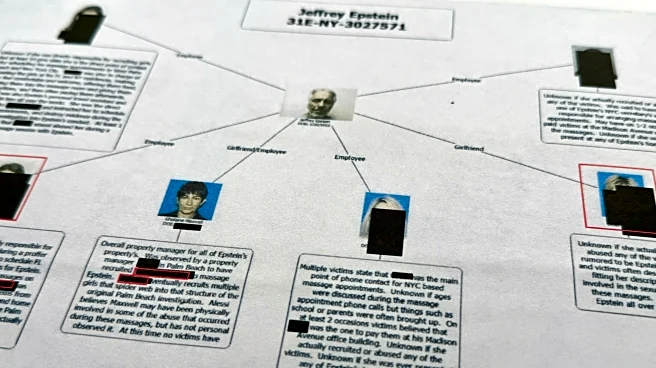
A group of 19 accusers of Jeffrey Epstein has claimed that the Department of Justice violated the law in its release of files related to Epstein's abuse. The accusers criticized the DOJ for the limited
release and heavy redactions of the files, which they say left numerous victim identities unredacted, causing harm. The DOJ faced a deadline to release the files under the Epstein Files Transparency Act, but the release has been criticized for being incomplete and lacking context. The accusers have called for more transparency and accountability in the release of the files.
Why It's Important?
The handling of the Epstein files is crucial for transparency and justice in cases involving sexual abuse. The accusations from accusers highlight the challenges in balancing transparency with the protection of victim identities. The situation underscores the need for a more transparent and accountable process in handling sensitive information. The outcome of this release could impact public trust in the justice system and the handling of similar cases in the future. The criticism from accusers emphasizes the importance of compliance with legal obligations and the protection of survivors.
What's Next?
The DOJ has pledged to continue releasing documents while ensuring the protection of victim identities. The ongoing release and potential legal actions could lead to further scrutiny and pressure on the department to comply with the transparency act. The situation remains fluid, with potential implications for public trust and accountability in the justice system. The accusers and their representatives have called for immediate oversight from Congress to ensure the DOJ fulfills its legal obligations.