


What's Happening?
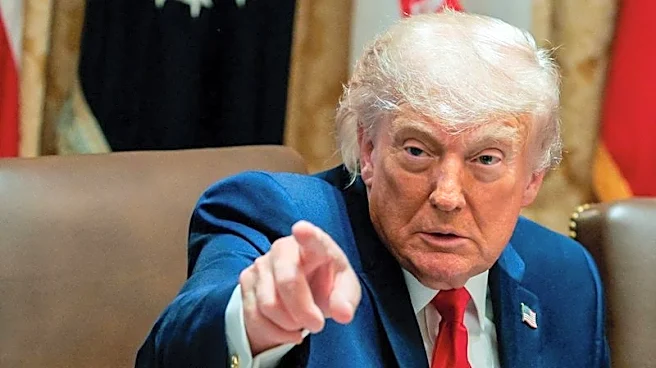
Colorado Democrats have expressed strong opposition to President Trump's proposed $1.8 billion 'anti-weaponization fund.' This fund is intended to provide financial compensation to Trump allies who believe they were unjustly targeted by investigations
or prosecutions. The fund has been criticized by Colorado's Democratic senators, including John Hickenlooper, who labeled it a 'slush fund' and plans to propose an amendment to prevent individuals like former Mesa County Clerk Tina Peters from benefiting. The fund has also raised concerns among some Republican senators, who question the executive branch's ability to distribute funds without judicial oversight. Despite the controversy, President Trump remains committed to the fund, citing it as a means to provide justice to those he claims were wronged by the Biden administration.
Why It's Important?
The proposed fund has significant implications for U.S. politics and public policy. It highlights ongoing tensions between the Trump administration and its critics, as well as within the Republican Party itself. The fund's creation could set a precedent for executive power in distributing financial resources without legislative approval, raising concerns about checks and balances in government. Additionally, the fund's potential to reward individuals involved in controversial activities, such as the January 6 Capitol attack, could further polarize political discourse and impact public trust in government institutions. The debate over this fund underscores broader issues of accountability and the use of taxpayer dollars in politically charged contexts.
What's Next?
The future of the anti-weaponization fund remains uncertain. Republican leaders are expected to revisit the funding bill after the Memorial Day recess, with potential revisions to address concerns raised by both parties. The Senate parliamentarian's previous rejection of related funding proposals suggests that any new attempts will need to carefully navigate legislative rules. Meanwhile, bipartisan efforts in the House aim to block the fund, with some lawmakers introducing bills to prevent its implementation. As discussions continue, the outcome will likely influence future legislative strategies and the balance of power between the executive and legislative branches.