



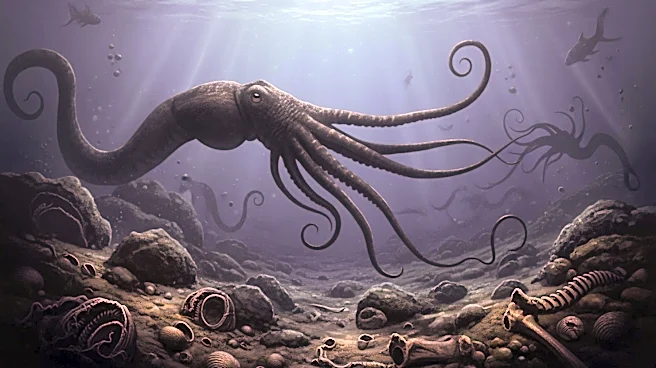
What's Happening?
A recent study led by researchers at Virginia Tech, published in Nature Communications Earth & Environment, has uncovered that the oceans began losing oxygen nearly 8 million years before the end-Triassic mass extinction, which occurred around 201 million years ago.
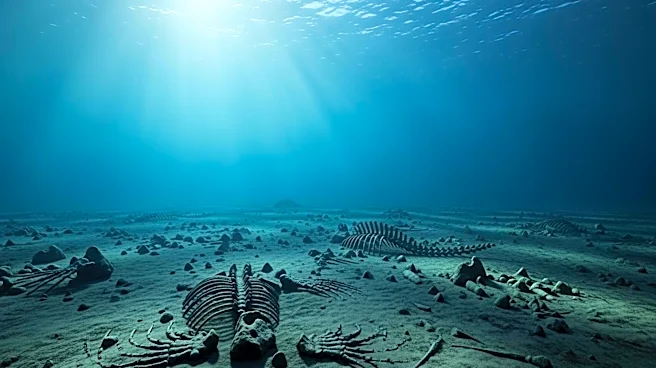
This extinction event saw the disappearance of approximately 60% of marine invertebrate genera. The research, conducted in Alaska's Wrangell–St. Elias National Park, involved analyzing chemical signals in ancient rocks, revealing a prolonged oceanic crisis rather than a sudden catastrophe. The findings suggest that marine ecosystems were under stress well before the volcanic eruptions from the Central Atlantic Magmatic Province, which are traditionally linked to the extinction. The study highlights a gradual decline in ocean conditions, with increasing deoxygenation and acidification, creating a hostile environment for marine life.
Why It's Important?
The study's findings are significant as they shift the timeline of environmental decline backward, suggesting that the oceans were already in trouble long before the main extinction event. This challenges the traditional view that the end-Triassic extinction was primarily caused by volcanic activity. The research underscores the complexity of ancient extinction events and highlights the potential for prolonged environmental stress to precede major biological crises. Understanding these patterns is crucial as modern oceans face similar threats from warming, acidification, and deoxygenation. The study provides a cautionary tale about the potential long-term impacts of environmental changes, emphasizing the need for proactive measures to protect marine ecosystems today.
What's Next?
The study opens new avenues for research into the early triggers of the end-Triassic extinction. Scientists are now tasked with exploring other potential volcanic activities or environmental factors that could have contributed to the early onset of oceanic stress. The findings also call for a reevaluation of the timeline and causes of ancient mass extinctions, which could lead to a better understanding of how current environmental changes might unfold. Further research is needed to pinpoint the exact mechanisms that led to the prolonged decline in ocean conditions, which could provide insights into preventing similar scenarios in the future.
Beyond the Headlines
The research highlights the importance of examining long-term environmental changes and their cumulative impacts on ecosystems. It suggests that mass extinctions may not always be the result of sudden catastrophic events but can be the culmination of prolonged stressors. This perspective could influence how scientists and policymakers approach current environmental challenges, emphasizing the need for sustained efforts to mitigate gradual changes that could lead to significant ecological disruptions.