









What's Happening?
Howard Zinn, a prominent historian known for his influential work 'A People's History of the United States,' remains a significant figure in shaping how Americans perceive their history. Despite being deceased for over a decade, Zinn's work continues
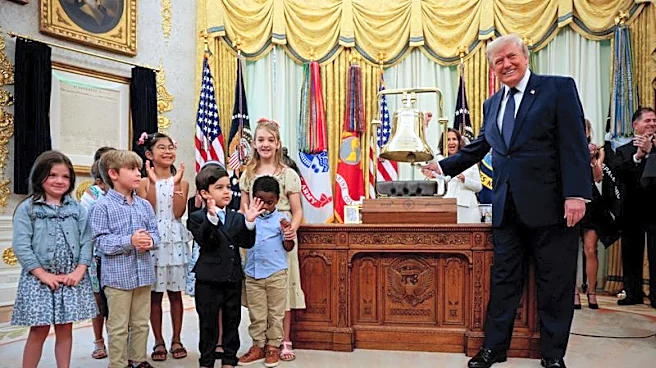
to inspire critical thinking and activism. His book, which presents U.S. history from the perspective of marginalized groups, has been both celebrated and criticized. President Trump, during his tenure, blamed Zinn's work for inciting left-wing unrest, highlighting the ongoing debate over Zinn's impact. Zinn's approach challenges the traditional narrative of history being driven by 'great men,' instead emphasizing the role of citizen movements in enacting change.
Why It's Important?
Zinn's work is crucial in the current socio-political climate, where misinformation and 'alternative facts' are prevalent. His emphasis on viewing history through the lens of ordinary people rather than elite figures encourages a more inclusive understanding of the past. This perspective is particularly relevant as the U.S. grapples with issues of social justice and historical accountability. Zinn's legacy prompts ongoing discussions about the role of education in fostering critical thinking and civic engagement. His work serves as a reminder of the power of grassroots movements in shaping history, a concept that remains vital as the nation faces challenges related to democracy and social equity.
What's Next?
The influence of Zinn's work is likely to persist as educators and activists continue to draw on his teachings to inspire new generations. As debates over educational curricula and historical narratives intensify, Zinn's approach may serve as a model for those advocating for a more comprehensive and truthful representation of history. The ongoing interest in Zinn's work suggests that discussions about the role of history in shaping societal values and policies will continue. This could lead to further examination of how history is taught in schools and its impact on public consciousness.
Beyond the Headlines
Zinn's legacy also raises questions about the ethics of historical interpretation and the responsibilities of historians. His work challenges the notion of objectivity in history, suggesting that all historical narratives are influenced by the perspectives of those who tell them. This has implications for how history is used to justify current policies and ideologies. Zinn's emphasis on hope and activism in the face of adversity offers a counter-narrative to despair, encouraging individuals to engage with history as a tool for social change.