



What's Happening?
Oregon lawmakers concluded a five-week legislative session with numerous proposed bills failing to pass. The session saw a variety of proposals aimed at addressing immigration, public health, education, and economic issues. Notably, a ballot-referral
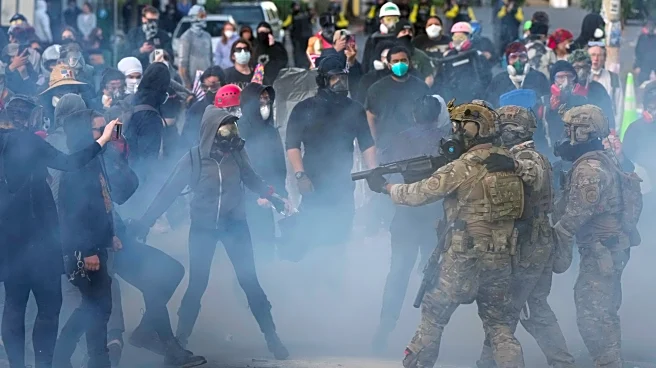
bill to ban 'secret police' was not passed, but House Bill 4138 was approved, allowing individuals to sue law enforcement agencies that do not comply with a new law prohibiting officers from wearing masks in most situations. Senate Majority Leader Kayse Jama indicated that efforts to protect immigrants and refugees would continue in future sessions. Other significant proposals that did not advance included changes to school funding methodology and public health measures related to marijuana edibles and harm reduction strategies.
Why It's Important?
The failure of many bills highlights the challenges in passing comprehensive legislation within a short session, especially when faced with partisan divides. The inability to pass significant immigration and public health measures may impact Oregon's ability to address these critical issues effectively. The session's outcomes reflect broader national debates on law enforcement practices, immigration policies, and public health strategies. The legislative gridlock could delay necessary reforms and affect the state's ability to respond to federal policies, particularly those from the Trump administration, which have been contentious in Oregon.
What's Next?
Lawmakers are expected to revisit many of the unpassed proposals in future sessions, with some advocates already planning to reintroduce their bills. The ongoing political dynamics in Oregon, including the Democratic majority's strategies and Republican opposition, will continue to shape the legislative landscape. Future sessions may see renewed efforts to address the issues left unresolved, such as immigration protections and public health initiatives. The state's approach to these challenges will be closely watched as it navigates the complexities of state and federal interactions.