


What's Happening?
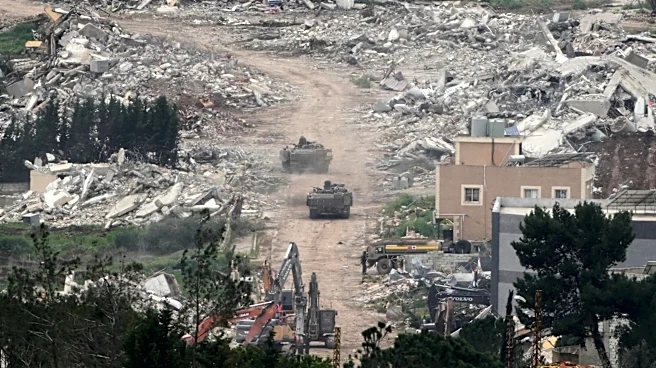
An Israeli military strike in southern Lebanon has resulted in the death of Lebanese journalist Amal Khalil and injuries to a photographer accompanying her. According to a senior Lebanese military official and Khalil's employer, Al-Akhbar newspaper, the incident
occurred when an Israeli drone dropped a grenade on rescue forces attempting to extract the journalists trapped under rubble. The Lebanese government has reached out to Israel through U.S. mediation, requesting permission for emergency teams to access the area and assist the wounded. This development is part of ongoing tensions in the region, with Israel frequently targeting areas in Lebanon believed to be associated with Hezbollah, a group it considers a significant threat.
Why It's Important?
The incident underscores the ongoing volatility in the Middle East, particularly between Israel and Lebanon, where Hezbollah operates. The death of a journalist highlights the risks faced by media personnel in conflict zones and raises concerns about the safety of civilians and non-combatants in military operations. This event could further strain diplomatic relations between Lebanon and Israel, potentially involving international stakeholders like the United States, which often plays a mediating role in such conflicts. The situation also draws attention to the broader implications for press freedom and the protection of journalists in war-torn regions.
What's Next?
The Lebanese government is likely to continue diplomatic efforts to ensure the safety of its citizens and journalists in conflict areas. International organizations advocating for press freedom and human rights may increase pressure on Israel to adhere to international laws protecting journalists. The incident could lead to heightened tensions in the region, prompting further military actions or diplomatic negotiations. Observers will be watching for any responses from Hezbollah, which could escalate the situation further.