





What's Happening?
A Stanford University lab, led by Assistant Professor Vayu Hill-Maini and Dr. Alessandra Massa, is pioneering a method to transform food waste into new edible products using fungi. The team at the biosciences institute, BIO-X, employs sophisticated bioengineering
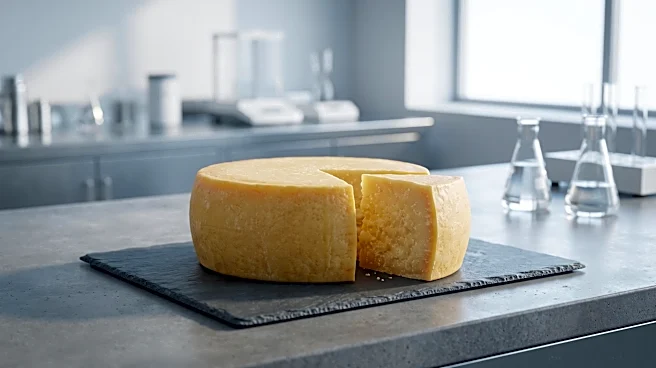
techniques, including gene editing, to control how fungi break down and react chemically with food waste during fermentation. This process aims to alter the flavor, texture, and appearance of discarded food, repurposing it into entirely different dishes. For example, the lab has successfully converted soymilk waste from a local tofu producer into a Parmigiano-Reggiano style hard cheese, utilizing up to 70% of the waste material. Another innovation includes a Saki-like beverage fermented from rice using specialized mold, which has been served in a two-Michelin-starred restaurant. The lab operates with a 'lab-to-kitchen' approach, developing and prototyping products and gathering feedback on taste, smell, and feel to inform their scientific research and engineering efforts.
Why It's Important?
This research holds significant implications for addressing global challenges such as food waste, food security, and environmental sustainability. By upcycling food waste, the Stanford lab's work can reduce the substantial amount of food that currently goes uneaten, which represents a waste of energy and a threat to food security. The development of new edible products from waste materials offers a novel approach to creating a more circular and less wasteful food system. This innovation could lead to the creation of new industries and markets for upcycled food products, potentially benefiting consumers with new flavors and sustainable options, and producers with reduced waste disposal costs and new revenue streams. Furthermore, by reducing food waste, the initiative contributes to lowering greenhouse gas emissions associated with decomposition, thereby positively impacting climate change efforts. The integration of bioengineering with culinary arts also highlights an interdisciplinary approach to solving complex societal problems.
What's Next?
The Stanford team plans to continue developing new flavors and recipes from upcycled food waste. They have partnered with the Doerr School of Sustainability to host a Chef in Residence, a Michelin-star chef, to further refine and expand their culinary creations. This collaboration aims to bridge the gap between scientific innovation and practical application in the food industry. The ultimate goal is to scale the impact of their work within the food system, focusing on reducing waste, promoting food security, and decreasing emissions. Future steps will likely involve further research into different types of fungi and food waste, optimizing fermentation processes, and exploring commercialization opportunities for their upcycled products. The success of these initiatives could lead to broader adoption of fungal-based upcycling technologies in food production globally.
Beyond the Headlines
The Stanford lab's work transcends mere waste reduction; it challenges conventional perceptions of food and waste, promoting a shift towards a more resource-efficient and sustainable culinary culture. Ethically, it addresses the moral imperative of utilizing resources responsibly in a world facing food scarcity and environmental degradation. Legally, as these upcycled products gain traction, there may be a need for new regulatory frameworks to ensure their safety, labeling, and market integration. Culturally, the introduction of novel foods derived from waste could reshape dietary habits and consumer preferences, fostering greater acceptance of sustainable food sources. This initiative also highlights the potential of biotechnology to offer innovative solutions to pressing global issues, demonstrating how scientific advancements can be harnessed to create tangible benefits for society and the environment, moving beyond traditional recycling to a more transformative 'upcycling' of resources.