



What's Happening?
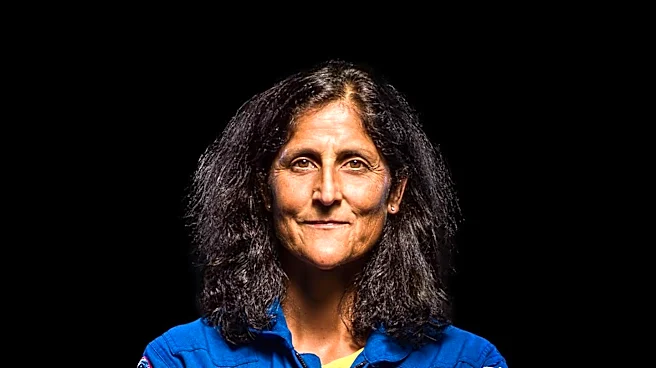
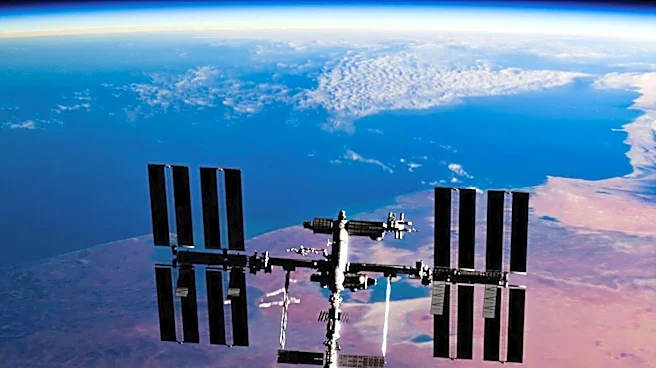
In April 2007, NASA astronaut Suni Williams achieved a groundbreaking feat by running a full marathon aboard the International Space Station (ISS). Williams completed the 26.2-mile distance while strapped to a treadmill, orbiting Earth at 17,500 miles
per hour. Her marathon time was 4 hours and 24 minutes, and she celebrated her finish with a triumphant 'Hooyah' that resonated with Mission Control. Williams, who has deep ties to the Boston Marathon, qualified for the 2007 race with a time of 3:29:57 at the Houston Marathon. Despite being in space, the Boston Athletic Association supported her participation by issuing her bib number 14,000, which was transmitted to the ISS. Williams ran using the Treadmill Vibration Isolation System, a specialized machine designed to counteract the lack of gravity and prevent vibrations from affecting the station. Her crewmates provided support by tossing weightless snacks and drinks, simulating aid stations on Earth.
Why It's Important?
Williams' marathon in space underscores the critical importance of maintaining physical fitness in microgravity environments. In space, the absence of gravity leads to rapid muscle and bone density loss, making rigorous exercise essential for astronauts' health. Williams' achievement not only demonstrated the feasibility of running a marathon in space but also highlighted the innovative solutions required to maintain fitness in such conditions. Her run served as a testament to human endurance and adaptability, inspiring future astronauts and showcasing the potential for athletic endeavors beyond Earth. This event also emphasized the role of exercise in long-duration space missions, which is crucial for the success of future explorations, including potential missions to Mars.
What's Next?
Williams' legacy continues to inspire, as she plans to run the Boston Marathon on Earth in 2026, marking her return to the iconic course. Her story has paved the way for other astronauts, such as British astronaut Tim Peake, who ran the London Marathon aboard the ISS in 2016. The ongoing emphasis on fitness in space missions will likely lead to further innovations in exercise equipment and protocols, ensuring astronauts remain healthy during extended stays in space. As space exploration advances, maintaining physical health will remain a priority, influencing the design of future spacecraft and habitats.
Beyond the Headlines
Williams' marathon in space highlights broader implications for human spaceflight, particularly the psychological and cultural aspects of maintaining Earthly traditions in space. Her participation in the Boston Marathon from orbit symbolizes the connection between astronauts and their home planet, fostering a sense of normalcy and morale. This event also raises questions about the future of sports and recreation in space, as humanity looks toward establishing a presence beyond Earth. The ability to adapt traditional activities to space environments could play a significant role in the well-being of future spacefarers.