
What's Happening?
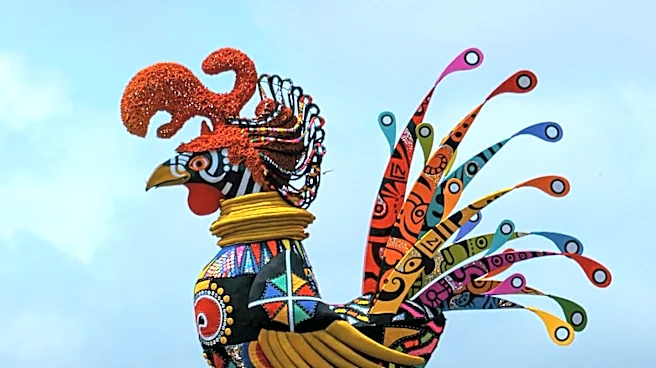
In Ogunquit, Maine, giant metal roosters have become symbols of autism acceptance following a zoning dispute involving David and Sara LeBlanc. The couple displayed these roosters on their lawn to comfort
their autistic daughter, Pyper, but faced fines from the town for allegedly using them as advertising for their restaurant, The Omelette Factory. The town eventually allowed the LeBlancs to keep two roosters, while others were distributed to supporters. The roosters, initially a personal comfort for Pyper, have now become a broader symbol of support for autism awareness, with displays appearing as far as New Zealand.
Why It's Important?
This story highlights the intersection of personal needs and public regulations, illustrating how community support can transform a local dispute into a movement for social awareness. The roosters, initially a source of contention, have become a symbol of autism acceptance, demonstrating the power of community solidarity. This case also raises questions about the balance between municipal regulations and individual rights, particularly in cases involving disability accommodations. The widespread support for the LeBlancs underscores a growing societal recognition of autism and the importance of inclusive practices.
What's Next?
The LeBlancs continue to face fines for noncompliance with zoning regulations, but they are focusing on the positive impact of their story. The community's support suggests potential for ongoing advocacy and awareness efforts. The town's decision to allow two roosters as a disability accommodation may set a precedent for similar cases, prompting discussions on how municipalities can better accommodate the needs of individuals with disabilities. The broader impact of this story may encourage other communities to adopt more inclusive practices.