





What's Happening?
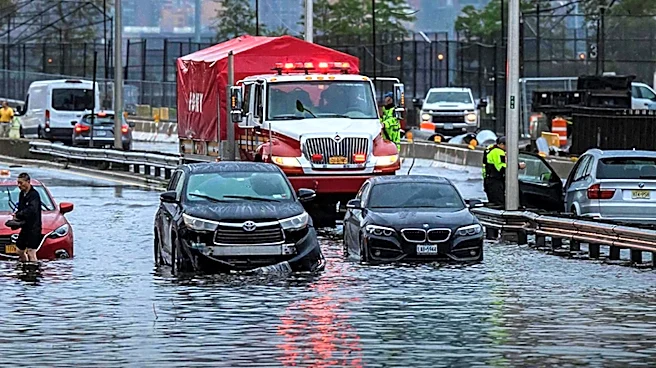
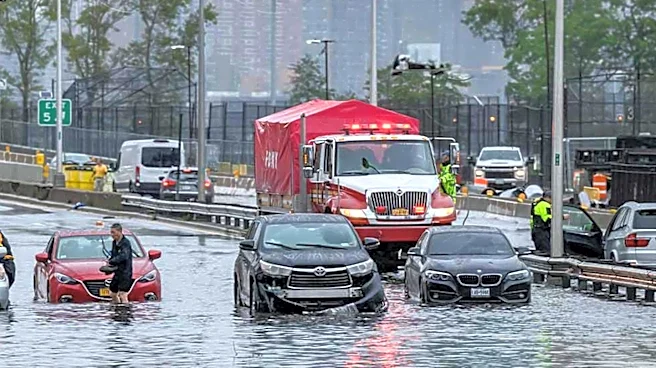
The Thornton Composite Reservoir, located in Illinois, has reached 94% capacity following a series of severe storms over the weekend. This marks the highest level since the reservoir became operational in 2015. The reservoir, which is the largest combined
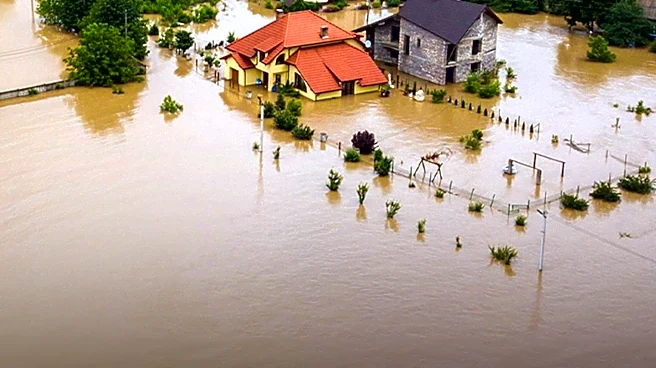
sewer reservoir in the world, serves a population of 556,000 across several communities including Chicago's Far South Side and surrounding suburbs. The storms caused significant flooding and damage, leading to the cancellation of Fourth of July festivities in several areas. Tinley Park was particularly affected, with reports of water rescues and extensive flooding. The Metropolitan Water Reclamation District is managing the situation by allowing water to flow back to the Calumet Water Reclamation Plant for treatment.
Why It's Important?
The near-capacity level of the Thornton Reservoir highlights the challenges faced by urban areas in managing stormwater and preventing flooding. The situation underscores the need for robust infrastructure to handle extreme weather events, which are becoming more frequent due to climate change. Communities affected by the flooding are experiencing significant disruptions, with damage to homes and public infrastructure. The event also raises concerns about the adequacy of current flood management systems and the financial resources required to upgrade them. The impact on local communities is profound, affecting daily life and economic activities.
What's Next?
In response to the flooding, local authorities are likely to assess the current infrastructure and explore options for improvements. This may involve seeking additional funding to enhance flood management systems. The Metropolitan Water Reclamation District will continue to monitor the reservoir levels and manage water flow to prevent further flooding. Community leaders may also engage with residents to address concerns and provide support for those affected by the storms. Long-term strategies may include investing in more resilient infrastructure to better cope with future extreme weather events.