



What's Happening?
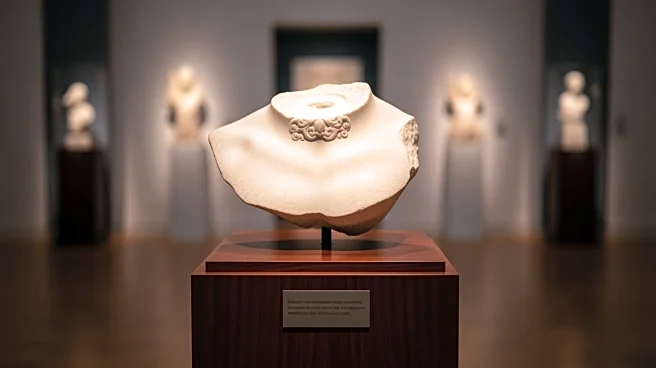
The UK government has implemented a temporary export ban on an 18th-century marble bust of Sir John Gordon, valued at £3.1 million, to prevent its sale to an overseas buyer. The sculpture, created by French artist Edmé Bouchardon in 1728, is currently
under the care of Highland Council. The council had proposed selling the bust to raise funds for the community of Invergordon, a town associated with the Gordon family. Culture Minister Baroness Twycross expressed hope that the sculpture could be acquired by a UK gallery or museum. The bust, once a feature of the Gordon family's Invergordon Castle, was purchased by Invergordon Town Council in 1930 for £5 and later stored at an industrial estate. It was largely forgotten until its recent rediscovery. Invergordon Museum has objected to the council's application for an export license, aiming to display the bust locally.
Why It's Important?
The temporary export ban highlights the UK's efforts to retain culturally significant artworks within the country. The decision underscores the importance of preserving national heritage and ensuring that valuable historical artifacts remain accessible to the public. The potential sale of the sculpture to an overseas buyer could have deprived the UK of a significant piece of its cultural history. The intervention by the UK government reflects a broader commitment to cultural preservation and the promotion of local heritage. The outcome of this situation could set a precedent for how similar cases are handled in the future, impacting the policies surrounding the export of culturally significant items.
What's Next?
The next steps involve determining whether a UK gallery or museum will acquire the sculpture, as intended by the government. The Highland Council's ongoing process regarding the export ban and potential sale will continue to unfold. Stakeholders, including local museums and cultural institutions, may engage in discussions to secure the sculpture's future within the UK. The outcome could influence future decisions on the export of culturally significant artifacts, potentially leading to stricter regulations or increased support for local acquisitions.