








What's Happening?
The National Oceanic and Atmospheric Administration (NOAA) has updated its forecast, indicating an 81% chance that a very strong El Niño will develop by October. This prediction comes as the Atlantic hurricane season reaches its climatological peak. El Niño,
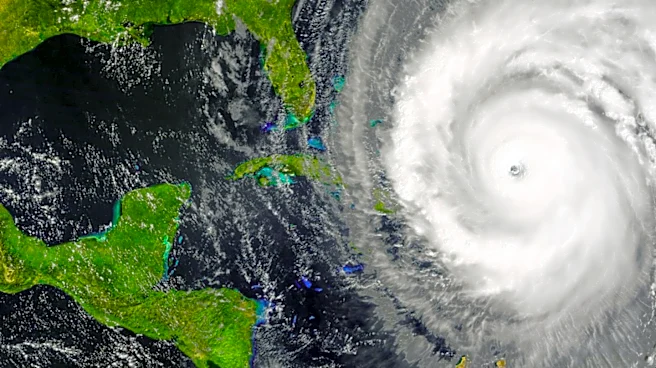
a phase of the El Niño-Southern Oscillation (ENSO), involves warmer than average water temperatures in the central Pacific Ocean, which can significantly alter atmospheric circulation and global weather patterns. The presence of El Niño is typically associated with a reduction in the number of hurricanes in the Atlantic due to stronger subtropical jet streams that hinder tropical storm development. Colorado State University has also adjusted its hurricane season forecast, citing the potential for a very strong El Niño.
Why It's Important?
The development of a strong El Niño has significant implications for weather patterns across the United States and globally. In the Atlantic, the presence of El Niño could lead to a quieter hurricane season, reducing the risk of destructive storms impacting coastal regions. This could have economic benefits by potentially lowering the costs associated with hurricane damage and disaster response. However, in the Pacific, El Niño conditions can lead to more intense hurricanes and typhoons, posing risks to regions in the path of these storms. The broader impact of El Niño includes potential shifts in precipitation patterns, which can affect agriculture, water resources, and energy production.
What's Next?
As the El Niño conditions continue to develop, meteorologists and climate scientists will closely monitor its progression and impact on weather patterns. NOAA and other agencies will provide ongoing updates and forecasts to help communities prepare for potential changes in weather conditions. Stakeholders in agriculture, disaster management, and energy sectors will need to consider the implications of El Niño in their planning and operations. Additionally, international cooperation may be necessary to address the global impacts of El Niño, particularly in regions vulnerable to extreme weather events.