
What's Happening?
A group of 28 leading astronomers, including Nobel laureate Reinhard Genzel, has signed an open letter urging the Chilean government to relocate a proposed green hydrogen plant. The plant, developed by
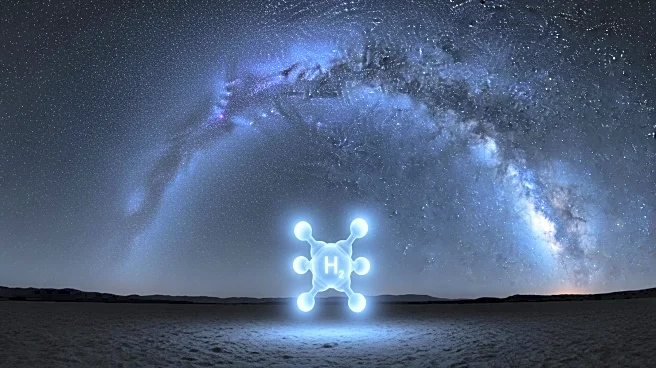
AES, is planned near the Cerro Paranal Observatory, home to some of the world's most advanced astronomical facilities. The astronomers warn that the plant could increase light pollution by up to 35%, affecting the observatory's ability to conduct cutting-edge research. The plant's proximity could also cause micro-vibrations and atmospheric turbulence, further hindering astronomical observations.
Why It's Important?
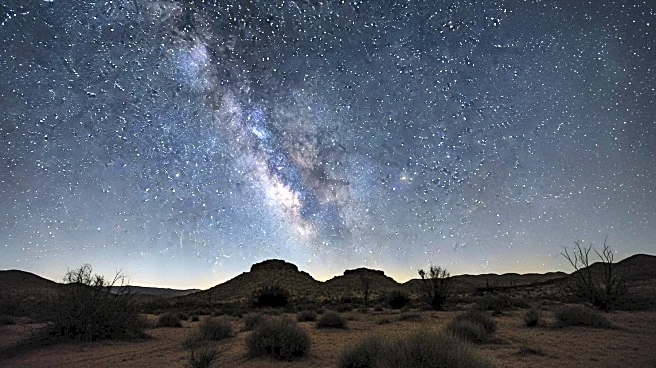
The Cerro Paranal Observatory is a critical site for global astronomical research, offering some of the clearest views of the universe. The potential light pollution and other disturbances from the hydrogen plant threaten to degrade the quality of observations, impacting studies on exoplanets, distant galaxies, and cosmic phenomena. Protecting such sites is essential for advancing our understanding of the universe. The conflict highlights the broader challenge of balancing industrial development with the preservation of scientific and natural resources.
What's Next?
The Chilean government is reviewing the environmental assessment submitted by AES for the hydrogen plant. The astronomers are advocating for the plant's relocation to minimize its impact on the observatory. The decision will set a precedent for how industrial projects are managed near sensitive scientific sites. If the plant proceeds as planned, it could lead to increased advocacy and policy changes to protect other astronomical observatories worldwide. The outcome will also influence future collaborations between industrial developers and the scientific community.