
What's Happening?
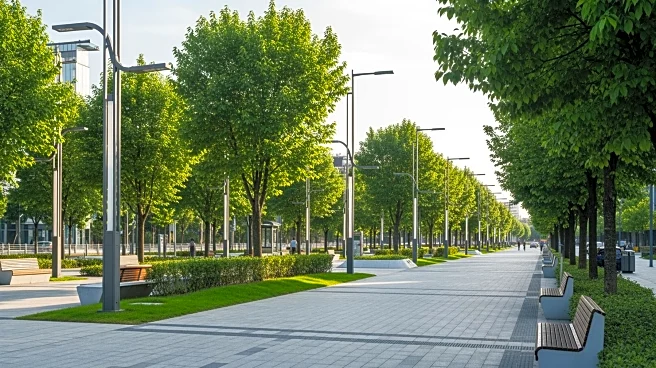
Philadelphia's Avenue of the Arts is set to undergo a significant transformation into a green space, with a project cost now estimated at $150 million, up from an initial $100 million. The project, known
as 'Avenue of the Arts 2.0,' aims to enhance the corridor's beauty and walkability, drawing parallels to the Champs-Élysées in Paris. The initiative will be executed in phases, starting with the demolition and rebuilding of the median strip in front of the Kimmel Center. This initial phase is expected to be completed by summer, with further work on surrounding sidewalks resuming in 2027. The project is a collaborative effort involving the city, state, and private property owners, with the city of Philadelphia contributing $3 million and the state adding $1.5 million. The design, led by Gensler, will address the complex infrastructure beneath the avenue, including gas, electrical, and water lines.
Why It's Important?
The transformation of the Avenue of the Arts is significant for Philadelphia's economic and cultural landscape. By enhancing the corridor's aesthetic and functional appeal, the project aims to boost local tourism and economic activity. State Rep. Jordan Harris emphasized the project's importance, noting that southeastern Pennsylvania is a key economic driver for the state. The initiative is expected to have a multiplier effect, with every dollar spent on cultural attractions potentially generating an additional $256 in spending. This could lead to increased business for local shops, restaurants, and cultural venues, benefiting the broader community. The project also reflects a growing trend towards urban green spaces, which can improve air quality and climate resilience.
What's Next?
As the project progresses, fundraising efforts will continue to secure additional funding. The phased approach allows for adjustments based on the unique requirements of each block, considering the existing infrastructure. Stakeholders, including city officials and private property owners, will need to collaborate closely to address the logistical challenges posed by the complex corridor. The project's success could serve as a model for similar urban transformations, potentially influencing future city planning initiatives. Public engagement and support will be crucial in maintaining momentum and ensuring the project's long-term impact.