
What's Happening?
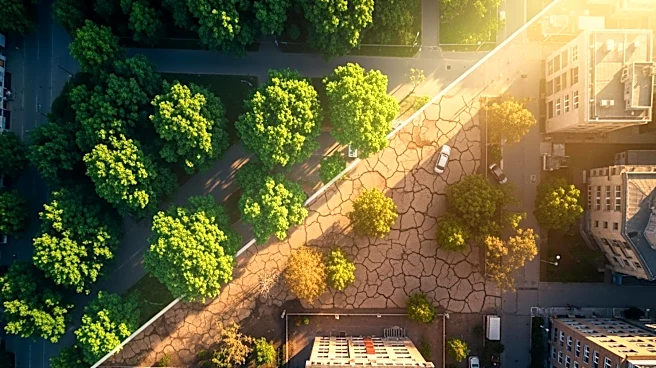
A new study published in Nature Communications reveals that trees are mitigating nearly half of the urban heat caused by pavement and buildings in cities worldwide. However, the cooling effect is not sufficient
in hotter, poorer cities where it is most needed. The study found that tree cover cools urban areas by an average of 0.27 degrees Fahrenheit, but without trees, cities would be 0.56 degrees Fahrenheit warmer due to the urban heat island effect. The research highlights a disparity in tree cover, with wealthier cities benefiting more from cooling effects than poorer ones.
Why It's Important?
The findings underscore the critical role of urban tree cover in combating the urban heat island effect, which exacerbates the impacts of climate change in cities. The lack of sufficient tree cover in poorer, hotter cities highlights a significant inequality in urban planning and resource allocation. As urban populations continue to grow, addressing this disparity is essential for improving public health and quality of life in vulnerable communities. The study calls for increased efforts to plant trees in underserved areas, although it acknowledges that trees alone cannot fully mitigate the impacts of climate change.