










What's Happening?
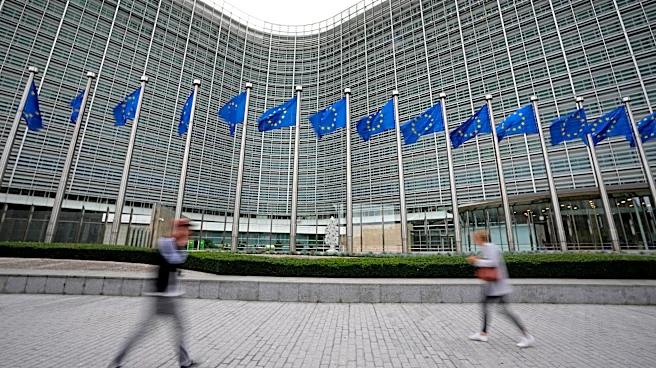
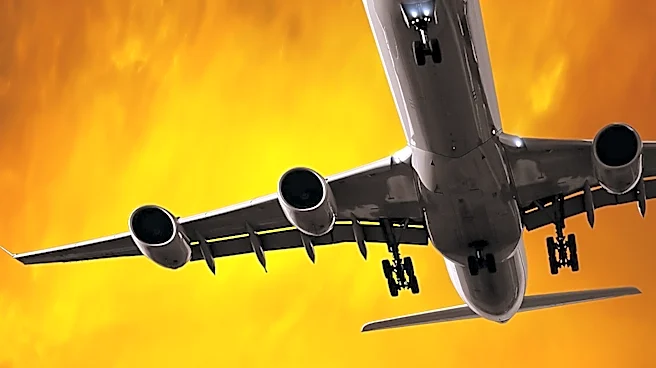
The European Commission has proposed extending its emissions trading system (ETS) to include flights up to 5,000 kilometers from the center of the European Union starting in 2029. This expansion aims to cover flights to third countries, excluding transatlantic
services, and is part of a broader review of the ETS. The proposal also includes initiatives to boost sustainable aviation fuel usage and measures to avoid double-counting with the global CORSIA program. The move follows an assessment of CORSIA, which concluded that it has not been sufficiently strengthened.
Why It's Important?
The extension of the ETS to flights beyond Europe represents a significant step in the EU's efforts to reduce aviation emissions and combat climate change. By including more flights in the ETS, the EU aims to incentivize airlines to adopt cleaner technologies and fuels. This could have substantial implications for the aviation industry, potentially increasing operational costs for airlines and affecting ticket prices. The proposal also highlights the EU's commitment to aligning with global climate initiatives while maintaining its regulatory autonomy. The decision could influence international aviation policies and encourage other regions to adopt similar measures.
What's Next?
The proposed changes to the ETS are set to take effect in 2029, with a review of CORSIA's implementation scheduled for 2032. The EU will continue to engage with international stakeholders to ensure alignment with global climate goals. Airlines and industry groups are expected to lobby for adjustments to the proposal, particularly concerning the reinvestment of ETS revenues into emission reduction efforts. The outcome of these discussions will shape the future of aviation emissions regulation and could lead to further policy developments at both the EU and international levels.