






What's Happening?
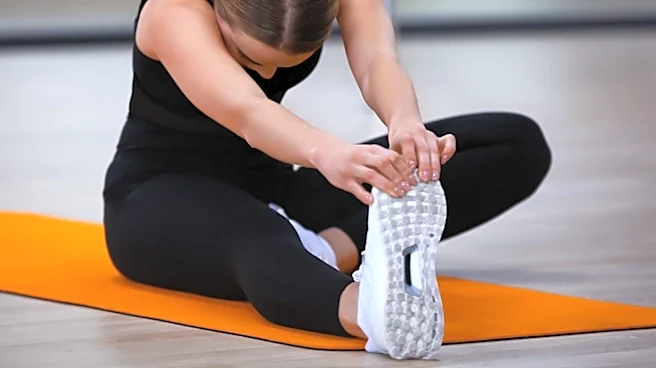
Recent biomechanical reviews indicate that static stretching, commonly held for 30 to 60 seconds, increases range of motion predominantly through neurological mechanisms rather than by permanently lengthening muscle tissue. This process, termed 'Sensory
Stretch Tolerance,' involves the central nervous system reducing its protective threat alarm, allowing for greater movement. Additionally, static stretching provides temporary viscoelastic stress-relaxation in connective tissues, which typically lasts for about 30 to 60 minutes before tissues return to their baseline. This understanding challenges the long-held belief that stretching physically elongates muscles like 'pulling warm chewing gum.' The research highlights that while static stretching can be a valuable tool when used strategically, such as post-workout or for parasympathetic down-regulation, its primary effect is on the nervous system's perception of end-range safety and temporary tissue compliance. For permanent length gains, methods like eccentric Heavy Slow Resistance (HSR) loading are more effective as they stimulate the creation of new sarcomeres within muscle fibers.
Why It's Important?
This re-evaluation of static stretching's mechanism has significant implications for fitness professionals, athletes, and individuals engaged in physical activity across the U.S. Understanding that static stretching primarily influences neurological stretch tolerance rather than structural lengthening can lead to more effective and safer training protocols. For instance, prolonged static stretches (over 60 seconds) immediately before high-power activities like sprinting or maximal lifting can lead to a temporary 3% to 7% drop in peak force output, known as 'Stretch-Induced Strength Loss.' This knowledge is crucial for athletes aiming to optimize performance and prevent injury. Furthermore, for individuals dealing with conditions like tendinopathy or irritated spinal nerve roots, inappropriate static stretching can worsen their condition. This shift in understanding emphasizes the need for tailored mobility programs that consider the specific physiological effects of different stretching modalities, ensuring that individuals choose the right tool for their goals, whether it's temporary flexibility, performance enhancement, or long-term structural changes.
What's Next?
The evolving understanding of stretching mechanics suggests a move towards more nuanced and evidence-based approaches in physical therapy and fitness training. Expect to see a greater emphasis on dynamic warm-ups before exercise to prepare the body without compromising power, and the strategic placement of static stretching for post-workout recovery or evening relaxation. There will likely be increased adoption of techniques like eccentric Heavy Slow Resistance (HSR) loading for individuals seeking permanent increases in muscle length and active control over their range of motion. Physical therapists and trainers may also focus more on differential diagnoses to determine the root cause of 'tightness,' distinguishing between true myofascial tightness, neural tension, or tendinous issues, to prescribe the most appropriate interventions. Educational efforts will be crucial to inform the public and professionals about these updated biomechanical insights, leading to more effective and injury-preventing exercise routines.
Beyond the Headlines
The deeper implications of this research extend beyond immediate training adjustments, touching upon the broader philosophy of physical well-being and injury prevention. It underscores the complex interplay between the nervous system and musculoskeletal system, highlighting that flexibility is not solely a mechanical property but also a neurologically regulated phenomenon. This perspective encourages a holistic view of movement, where the brain's perception of safety plays a critical role in how far a body can move. Ethically, this knowledge places a greater responsibility on fitness and healthcare professionals to stay updated with scientific advancements to provide accurate guidance, preventing potential harm from outdated practices. Culturally, it challenges long-held beliefs about stretching that have been ingrained in fitness routines for decades, prompting a re-evaluation of traditional warm-up and cool-down protocols. This shift could lead to a more intelligent and integrated approach to physical activity, fostering greater body awareness and promoting long-term joint health and functional mobility.