
What's Happening?
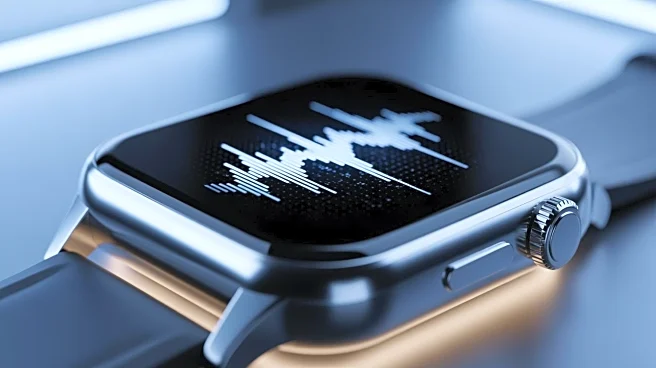
Researchers have conducted a study using Fitbit Sense smartwatches to explore the potential of electrocardiogram (ECG) data in predicting a user's age. The study involved 220 participants aged between
3 and 78, and tested various machine-learning models to determine if heart-signal patterns could accurately reveal a user's age. The most successful model, a basic feedforward neural network, predicted age with an average error of just under three years, achieving an accuracy rate between 93 and 96 percent. This method outperformed previous studies that used hospital-grade ECGs. The study highlights that ECG data, which changes noticeably through adolescence and early adulthood, is more challenging to fake than photos and can be processed anonymously, suggesting its potential for safer, privacy-respecting age verification.
Why It's Important?
The study's findings could have significant implications for online age-restricted services, offering a more secure alternative to traditional age verification methods like facial recognition or ID checks. By utilizing ECG data, which is difficult to falsify and can be processed without compromising user privacy, this technology could enhance security and privacy in digital interactions. This development is particularly relevant in the context of increasing concerns over data privacy and the need for more reliable age verification methods in various online platforms.
What's Next?
For the technology to be widely adopted, further research involving larger and more diverse samples is necessary. Collaboration with smartwatch manufacturers could facilitate the integration of this age verification method into consumer devices. As the technology matures, it could potentially be used in various applications beyond age verification, such as personalized health monitoring and other biometric-based security measures.