
What's Happening?
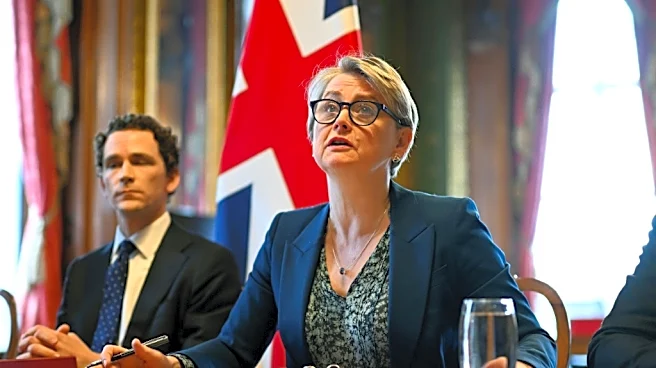
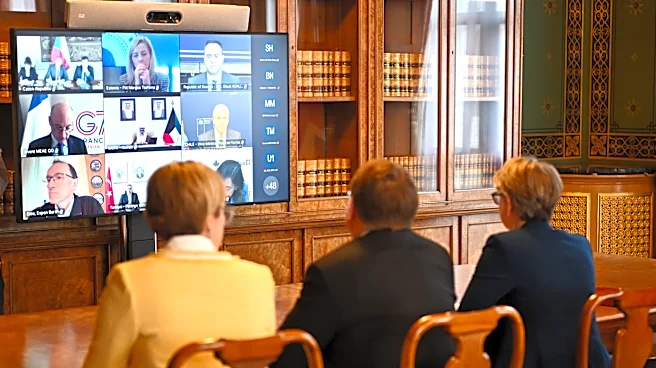
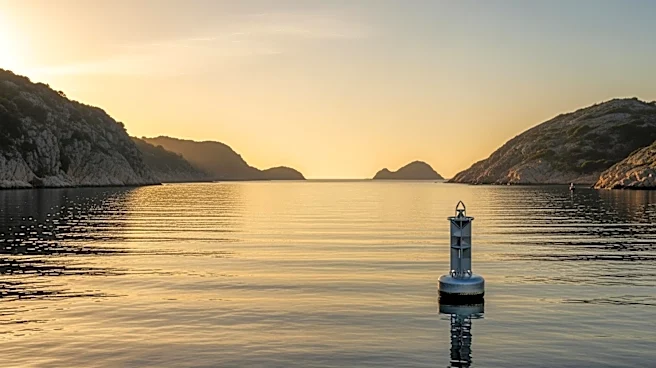
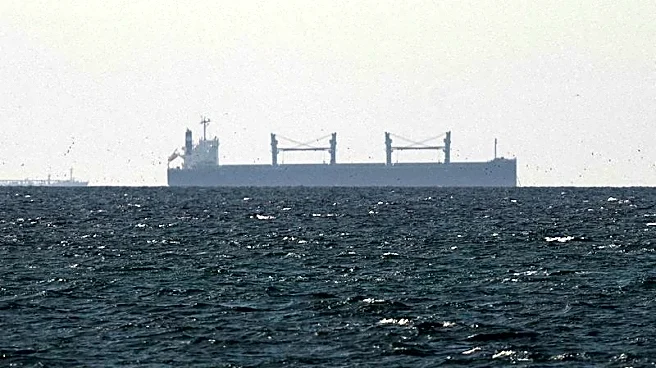
The United Kingdom is hosting a virtual summit with over 40 countries to discuss reopening the Strait of Hormuz, a critical shipping route that has been effectively shut down by Iran in retaliation for US-Israeli military actions. The closure of the strait
has significantly impacted global oil prices, leading to economic strain worldwide. The talks, led by UK Foreign Secretary Yvette Cooper, focus on diplomatic and political solutions rather than military intervention. French President Emmanuel Macron emphasized that reopening the strait by force is unrealistic and should be pursued through negotiations following a potential ceasefire. The international community is seeking to ensure the safe passage of oil and gas tankers through the waterway once the conflict subsides.
Why It's Important?
The closure of the Strait of Hormuz has caused a significant spike in oil prices, affecting economies globally. As a vital passage for a substantial portion of the world's oil supply, its reopening is crucial for stabilizing energy markets and preventing further economic disruption. The international effort to address this issue underscores the global reliance on this strategic waterway and the interconnectedness of global energy security. The talks also highlight the geopolitical complexities of the region, with countries balancing the need for security and economic stability against the backdrop of ongoing military conflicts.
What's Next?
The UK and its allies are planning further discussions involving military planners to ensure the security of the strait once a ceasefire is achieved. This includes potential mine-clearing operations and measures to protect commercial shipping. The international coalition aims to demonstrate a united front in addressing the crisis, potentially influencing future diplomatic engagements with Iran. The outcome of these talks could set a precedent for international cooperation in resolving similar geopolitical challenges.