
What's Happening?
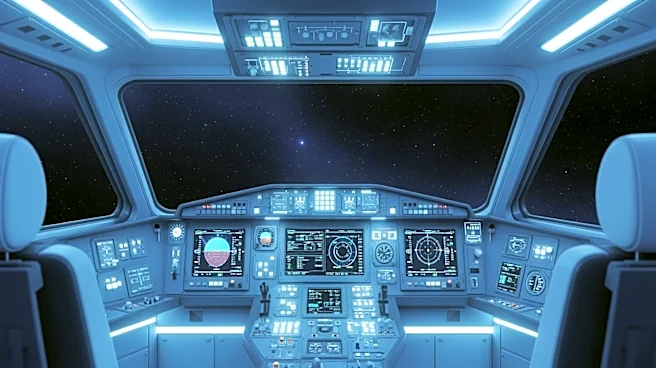
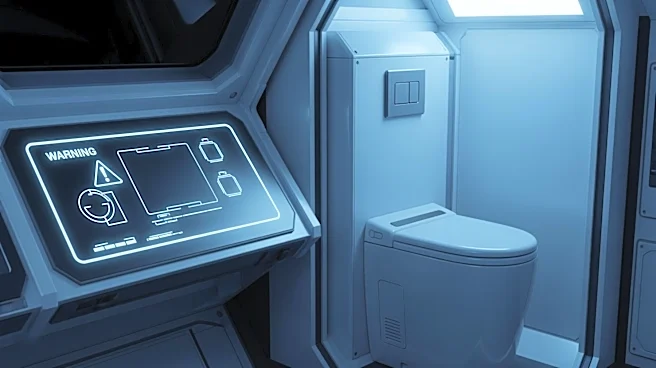
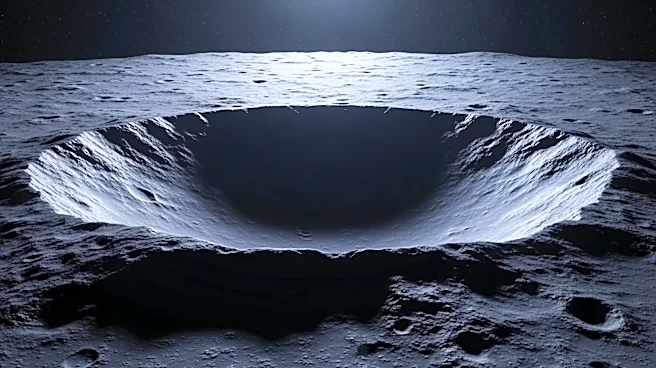
NASA's Artemis II mission has captured new images of the moon, revealing the Orientale basin, a region never before observed by human eyes. The images were taken by the Artemis II astronauts aboard the Orion
spacecraft, showcasing both the moon and the interior of the spacecraft. The Orientale basin, a 600-mile-wide crater, represents a transition region between the near and far sides of the moon. This marks a significant milestone as it is the first time this lunar region has been seen by humans, previously only observed by robotic imagers. The mission, which is part of NASA's efforts to send humans into deep space for the first time in over five decades, continues to provide stunning views of both the moon and Earth.
Why It's Important?
The Artemis II mission's ability to capture images of previously unseen lunar regions underscores the advancements in space exploration technology and the potential for new scientific discoveries. By observing the Orientale basin, scientists can gain insights into the moon's geological history and its formation. This mission also represents a significant step in NASA's broader Artemis program, which aims to establish a sustainable human presence on the moon and eventually pave the way for human exploration of Mars. The images not only contribute to scientific knowledge but also inspire public interest and support for space exploration initiatives.
What's Next?
As the Artemis II mission progresses, the crew is expected to conduct a lunar flyby, bringing them closer to the moon than any human has been in decades. This will provide further opportunities to capture high-resolution images and gather data that could inform future lunar missions. The success of Artemis II will set the stage for Artemis III, which aims to land astronauts on the lunar surface. Continued advancements in spacecraft technology and international collaboration will be crucial in achieving these ambitious goals.