






What's Happening?
Food security remains a critical global challenge, with millions struggling to access sufficient, safe, and nutritious food. The Food and Agriculture Organization of the United Nations (FAO) emphasizes that the issue extends beyond mere food production
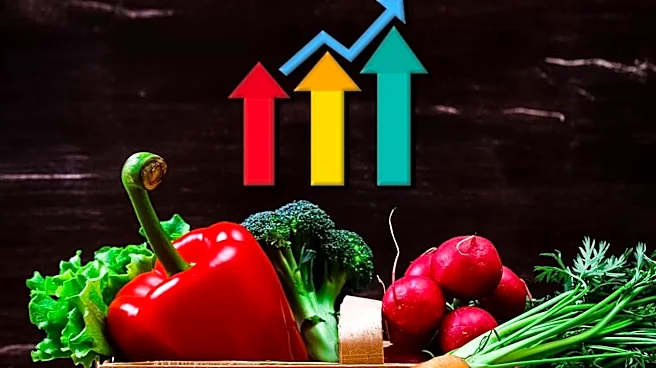
to encompass access, affordability, and nutritional quality. In Nigeria, for instance, food security is significantly hampered by high agricultural production costs, insecurity in farming communities, inadequate storage facilities, and transportation difficulties. These factors contribute to rising food prices, making it difficult for low-income families to afford essential items and often forcing them to compromise on nutritional variety. The global community observes World Food Day annually on October 16 to reflect on these challenges and renew efforts to ensure universal access to food.
Why It's Important?
The global food security crisis has far-reaching implications, impacting public health, economic stability, and social equity. When families lack access to adequate nutrition, it can severely affect children's development, learning, and overall health, and reduce adult productivity. The disparity in food access highlights that increasing agricultural production alone is insufficient; efforts must also focus on poverty reduction, improved food distribution, and minimizing post-harvest losses. The challenges faced by farmers, including insecurity and climate-related events, directly impact food supplies and market prices, creating a ripple effect that disproportionately affects vulnerable populations. Addressing these issues is crucial for fostering stable societies and economies worldwide.
What's Next?
Addressing global food insecurity requires coordinated action across the entire food value chain, involving governments, farmers, businesses, communities, and individuals. Practical interventions include improving rural infrastructure, expanding access to affordable agricultural inputs, strengthening irrigation systems, and investing in storage and processing facilities. Governments are urged to support agricultural development through investments and to implement well-designed social protection programs, such as school feeding initiatives and targeted food assistance. The private sector also has a vital role in investing in agricultural technology and adopting responsible practices to minimize food losses. These sustained efforts are essential to build resilient agricultural systems and ensure reliable access to nutritious food for all.
Beyond the Headlines
The fight against hunger is deeply intertwined with broader issues of human dignity and social justice. Food insecurity is not merely the absence of food but also the inability to consistently obtain sufficient, nutritious food without sacrificing other essential needs. This distinction underscores the importance of focusing on nutritional quality alongside food availability. Climate change further complicates food security, as unpredictable weather patterns and natural disasters threaten agricultural production. Therefore, preparing food systems for climate-related risks is not just an environmental concern but an investment in livelihoods and long-term food security. Ultimately, achieving a world without hunger demands practical solutions, sustained investment, effective policies, and robust cooperation among all stakeholders.